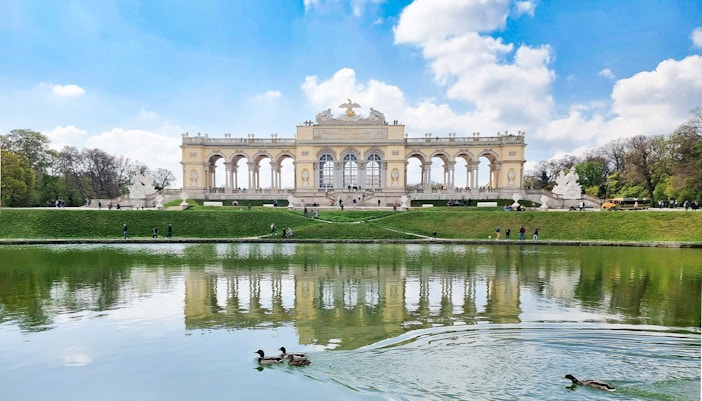
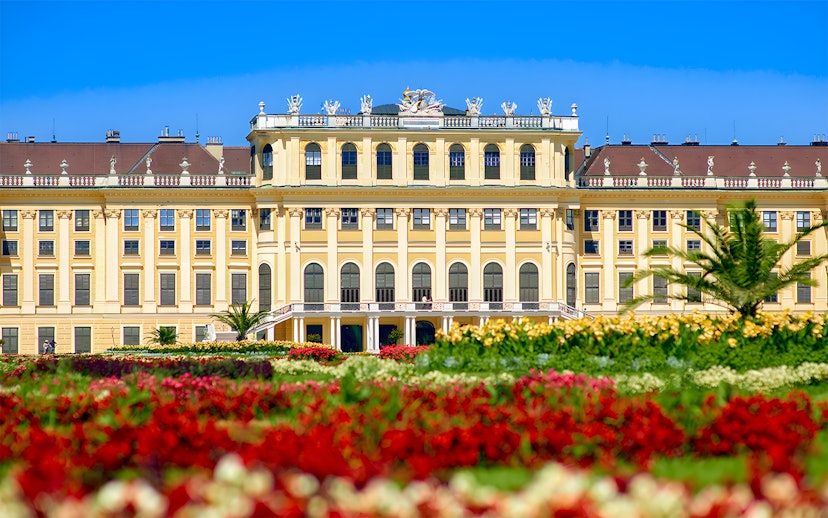
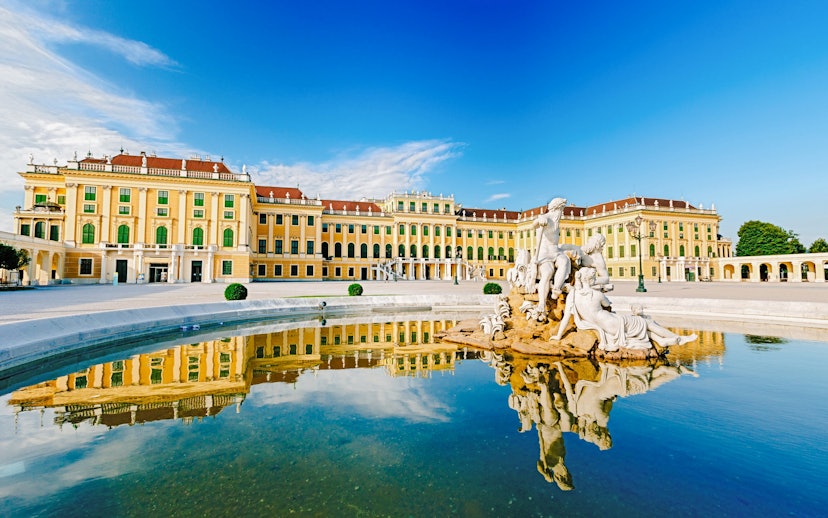
Go between 8:30am and 10am or after 4pm for the calmest paths and softer light on the stonework. Late morning brings the heaviest garden foot traffic around the main axis and Gloriette approach. If photos matter, don’t arrive here between 11am and 2pm.
Roman Ruins Tickets
Included with Schönbrunn Palace tickets
Timings
RECOMMENDED DURATION
4 hours

Top things to do in Vienna
Quick overview
Access: Included in all tickets (and free-access public areas)
Separate ticket: Not required
When you'll see it: Midway on the walking route from the main parterre up towards the Gloriette
Visit duration: 5–10 mins self-guided
Best time: Early morning or late afternoon for optimal lighting and fewer crowds
Restrictions: None (outdoor public park area)

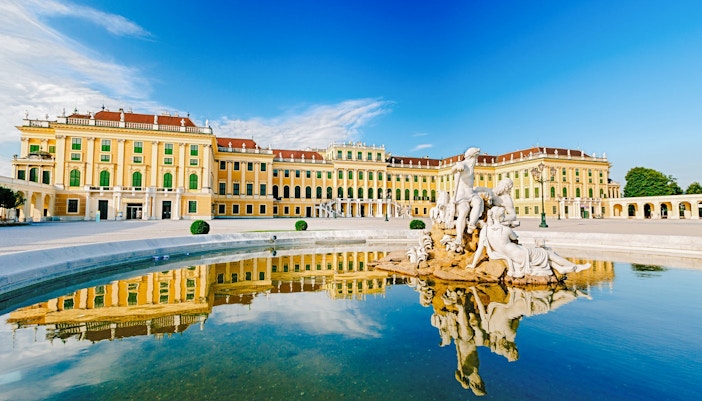
The Roman Ruins are included with all Schönbrunn Palace tickets, and no separate ticket is needed. They sit in the free-access palace gardens rather than on the palace interior route, usually reached midway through a garden walk between the main parterre, the Neptune Fountain area, and the wooded paths below the Gloriette, so you can skip them if you’re short on time. Book a palace-and-gardens guided tour or a skip-the-line palace ticket with the panoramic train if you want to reach them without using all your energy on the walk first.
How to best experience the Roman Ruins
Best time to visit
How long to spend
Plan 10–15 minutes for a quick stop, or 20–30 minutes if you want to walk around the structure and photograph it properly. The ruin itself is compact, but the effect changes as you move around it. If you only pause at the first viewpoint, you’ll miss that.
Where it fits in your itinerary
Fit it between the Neptune Fountain and the Gloriette, or visit it on your way back down toward the palace through the western garden paths. Add 45–60 minutes total once you include the walk. If you’ve already done the full palace interior, pace yourself before heading uphill again.
Crowd patterns
The Roman Ruins are usually far quieter than the palace rooms or the central parterre. They feel busiest in late morning, when guided garden walks and independent visitors fan out from the fountain toward the hill. Early and late in the day, the wooded setting feels noticeably calmer.
What to prioritize if time is short
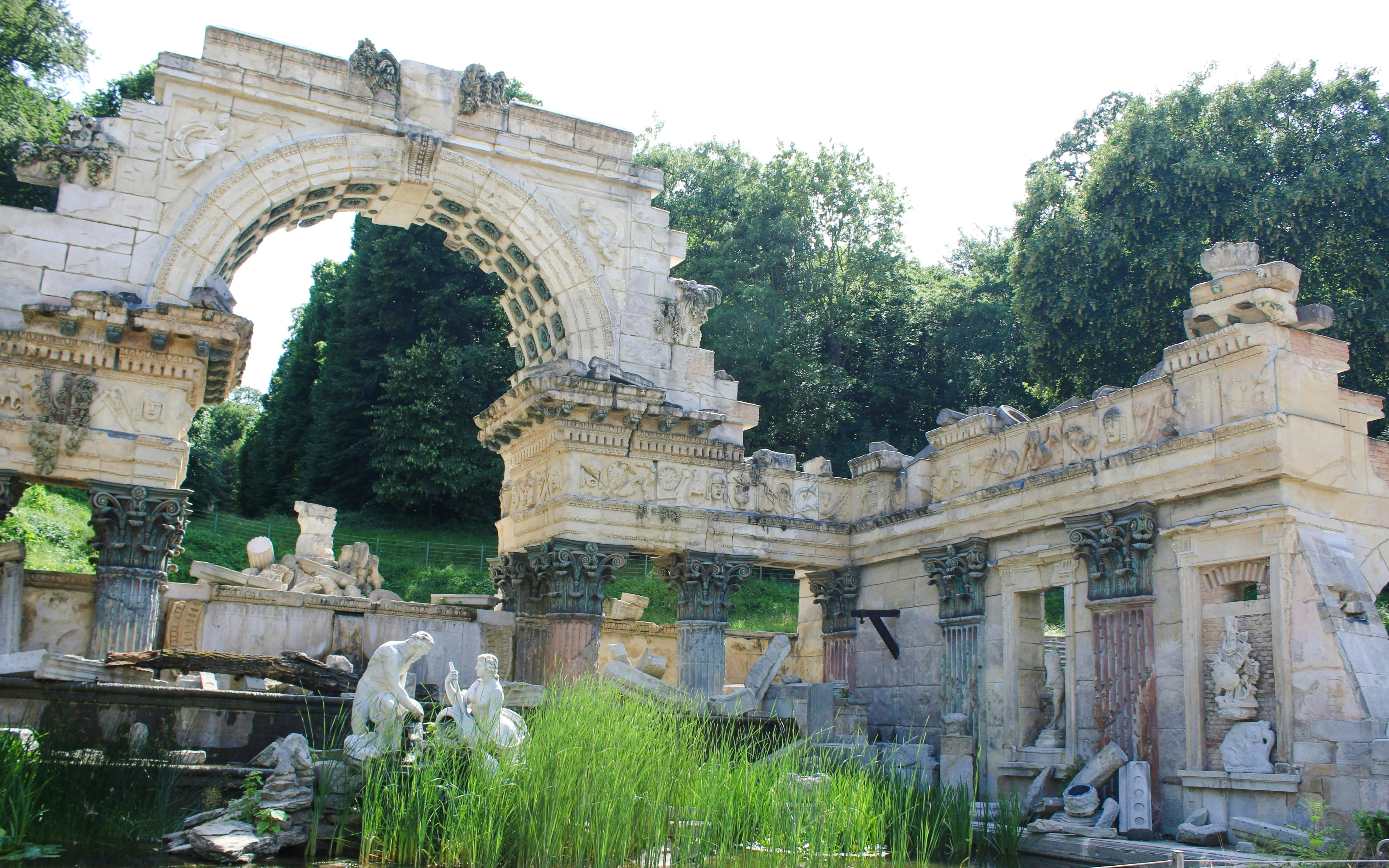
First, step far enough forward to see the full broken façade in one frame. Then move slightly off-center to read the depth of the arches and collapsed stonework, and finally include the basin in front if conditions are clear. Don’t just glance from the path and move on.
Common mistakes to avoid
The biggest mistake is expecting genuine ancient remains and then rushing past when you realize it’s a garden folly. The second is seeing it only from one angle. Also, avoid smooth-soled shoes after rain; the surrounding gravel and slopes can feel slick.
Best tickets to experience the Roman Ruins
| Ticket type | Why choose it |
|---|---|
Skip-the-line palace ticket with panoramic train | Best if you want palace interiors first, then easier movement across the large estate before or after your Roman Ruins stop. |
Guided tour of palace and gardens | Best for understanding why the ruin was built and how it fits Schönbrunn’s wider garden plan. |
Small-group guided tour | Better pacing, easier questions, and less stop-start waiting if the Roman Ruins are one of several garden priorities. |
Why it's worth seeing
Most visitors assume the Roman Ruins are a leftover fragment from antiquity, but they were designed to look broken from the beginning. That changes the experience: you’re not looking at archaeology, but at an 18th-century idea of what ruins should make you feel inside an imperial garden. Focus on the structure as staged architecture — how it reveals itself, how water and trees frame it, and how its mood differs from Schönbrunn’s formal parterre.
The broken façade
Designed in 1778, the Roman Ruins were meant to read as a collapse caught in stone. Stand directly in front first to see the full theatrical composition, then step to either side and notice how the surviving arch, fractured edges, and layered masonry were carefully planned rather than left to chance.
The basin in front
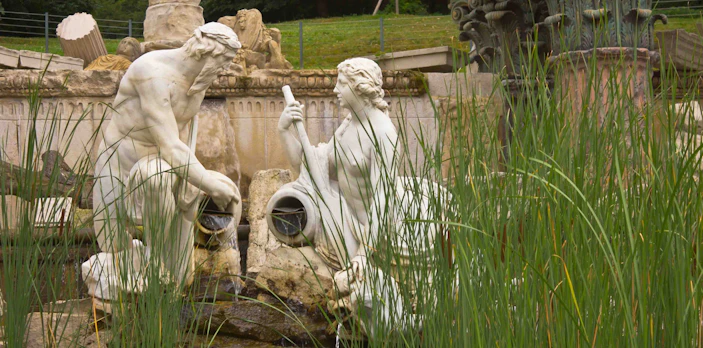
The ruin works best when you include the basin in the foreground. From the lower path, the water gives the structure scale and makes the whole composition feel deliberate, not decorative filler. If the surface is still, use it for reflections; if not, focus on the contrast between water, stone, and surrounding greenery.
The wooded setting
Unlike the open geometry behind the palace, this part of the estate feels enclosed and slightly theatrical. Approach from the Gloriette side if you want the reveal to feel gradual. Approach from the lower garden paths if you want a clearer, front-on first view. The setting is part of the point.
Historical and cultural significance
Most visitors don’t realise the Roman Ruins are not Roman at all. Designed in 1778 by Johann Ferdinand Hetzendorf von Hohenberg for Maria Theresa’s garden program, they were built to look ancient from the day they opened, reflecting the 18th-century taste for staged decay in landscape design. Today, the structure remains an important visual stop within Schönbrunn’s historic garden layout and public walking routes.
Notable figures
Maria Theresa | Patron
Oversaw the wider remaking of Schönbrunn into the imperial estate visitors recognise today.
Johann Ferdinand Hetzendorf von Hohenberg | Architect
Designed the Roman Ruins as a deliberate folly in 1778, not an excavation.
Johann Christian Wilhelm Beyer | Sculptor
Led major parts of Schönbrunn’s late-18th-century sculptural garden program.
Know before you go
- Open: The Roman Ruins are accessible during Schönbrunn Palace park hours; the park opens daily from 6:30am.
- Close: Park closing times change by season, so the latest access window varies throughout the year.
- Timed entry: There is no separate timed entry slot for the Roman Ruins.
- Weather: Severe weather can affect garden access or route conditions.
Address: Schönbrunn Palace Park, Schönbrunner Schlossstraße 47, 1130 Vienna, Austria
- From the main palace forecourt: Walk through the Great Parterre toward the Neptune Fountain area, then continue into the western wooded garden paths; allow about 15–20 minutes.
- From the Gloriette: Descend through the western garden paths; allow about 10–15 minutes.
- Entry point: The Roman Ruins have no separate gate; you reach them through Schönbrunn’s public palace grounds.
- Wheelchair access: Partial. Main park routes are broad, but the final approach around the ruins is gravel and can feel uneven.
- Best route: The flatter approach from the main garden side is usually easier than descending steeply from the Gloriette.
- Strollers: Generally manageable in dry conditions, but less comfortable after rain.
- Seating: Benches are available on surrounding garden paths.
- Reduced walking option: A panoramic train ticket can reduce cross-estate walking, though you’ll still need a short walk on foot.
- Photography: Personal photos in the gardens are generally allowed.
- Not permitted: Drones, tripods, selfie sticks, and lighting equipment are restricted across Schönbrunn visitor areas.
- Pets: Leashed dogs are generally allowed in outdoor park areas, but not inside palace buildings or palace interiors.
- Vehicles: Bicycles and personal vehicles are not permitted inside the palace park.
- Closures: Staff may reroute or close garden sections in severe weather for safety.
- Activity: Expect a garden walk on gravel paths with mild to moderate slopes.
- Standing: Most visitors spend 10–30 minutes at the ruins, plus walking time from nearby sights.
- Difficulty: Easy to moderate if you combine the Roman Ruins with the palace, Neptune Fountain, and Gloriette.
- Footwear: Closed, grippy shoes help on gravel, especially after rain.
- Alternative: Break the route with a café stop or use the panoramic train to reduce total walking.
Frequently asked questions about the Roman Ruins
Yes. Entry to the Roman Ruins is included with every Schönbrunn Palace ticket, and no separate ticket exists.
No. Any Schönbrunn ticket works, and the free-access park also lets you reach the Roman Ruins during garden opening hours.
No. The Roman Ruins have no independent ticketed entrance; you reach them through Schönbrunn’s palace park and garden paths.
Most visitors reach it midway through a garden walk. Allow about 15–20 minutes from the palace forecourt.
Plan 10–15 minutes for a quick stop, or 20–30 minutes with photos. It’s compact, but you’ll want time to walk around it.
Yes, on garden-inclusive tours. Palace-only guided tours may not walk as far as the Roman Ruins, so check the route before booking.
No. They were built in the 18th century as a decorative garden folly designed to look ancient.
Partly. Main park routes are manageable, but the final approach is gravel and can feel uneven after rain.
Yes, if you’re already walking toward the Gloriette. Skip it only if you’re doing palace interiors alone and not exploring the western gardens.
The full front view of the broken façade. Don’t stop at the first path glimpse; walk around and see how the ruin was staged.