- Built: Early 18th century, during the reign of Emperor Charles VI.
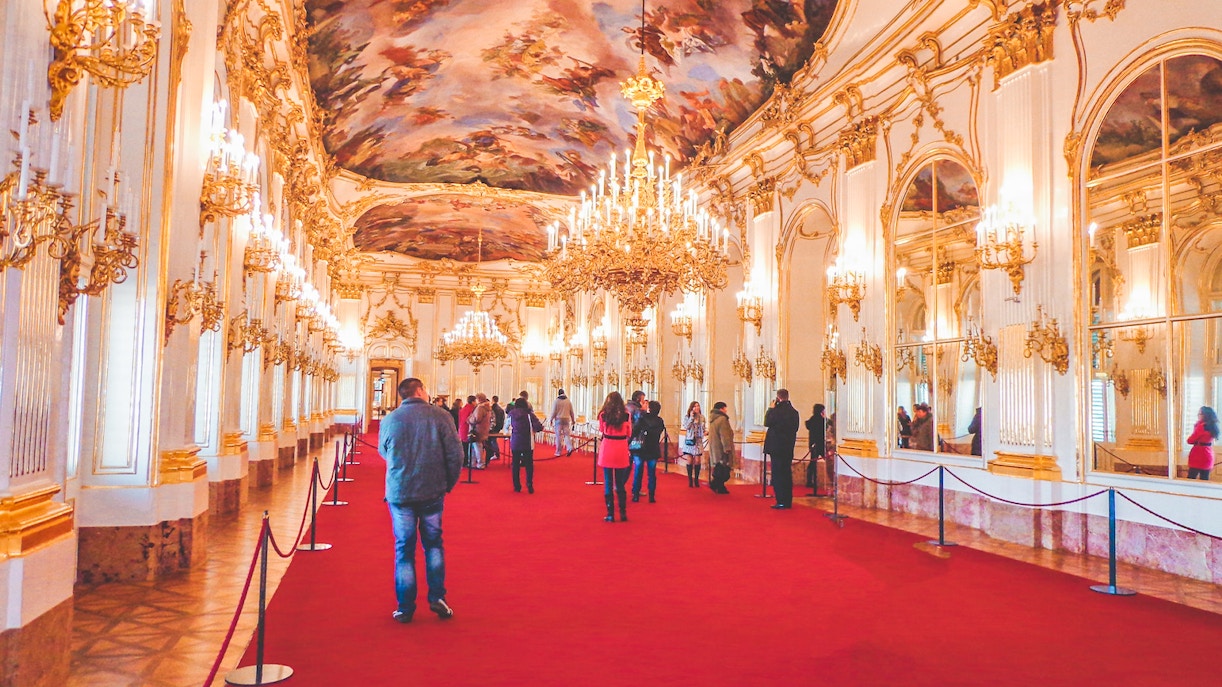
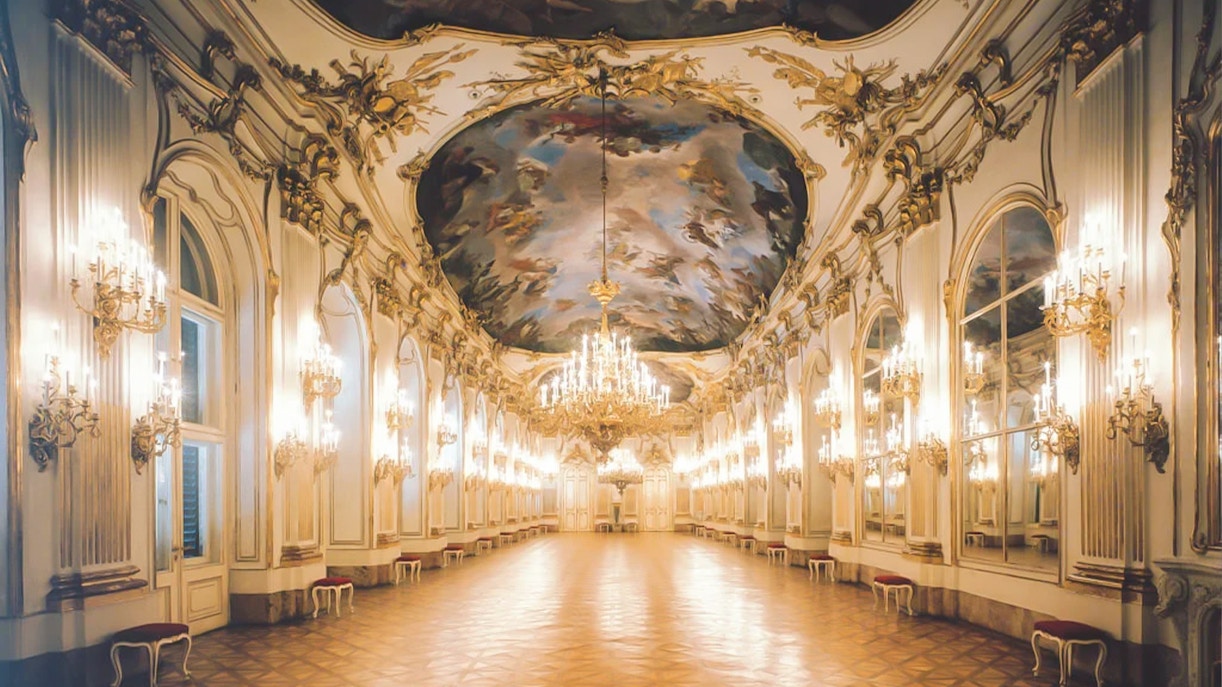
- Length: About 40 meters (131 feet), lined with floor-to-ceiling mirrors to create the illusion of endless space.
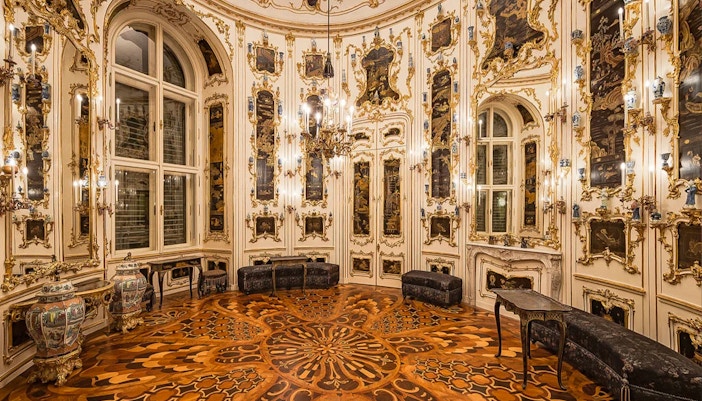
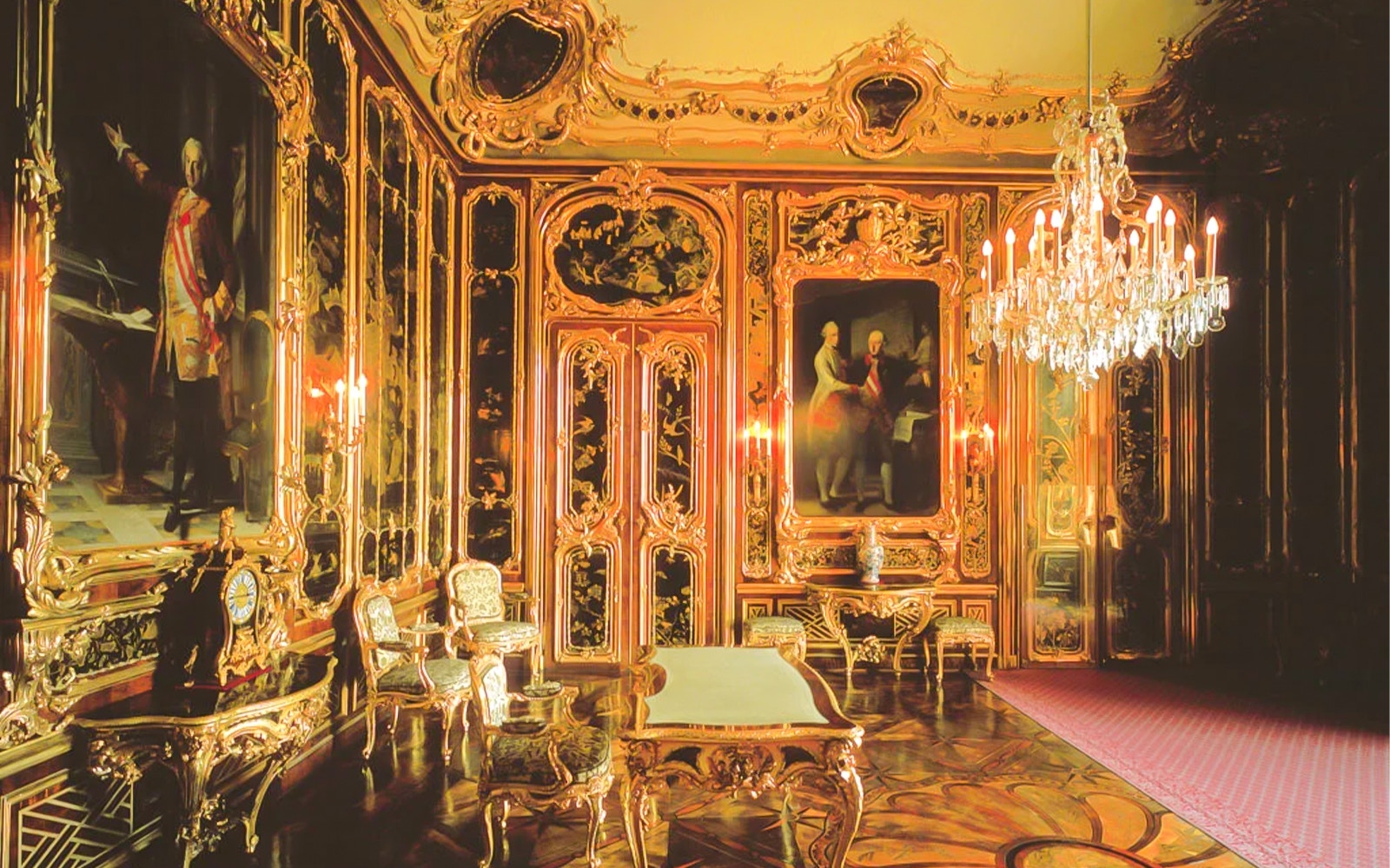
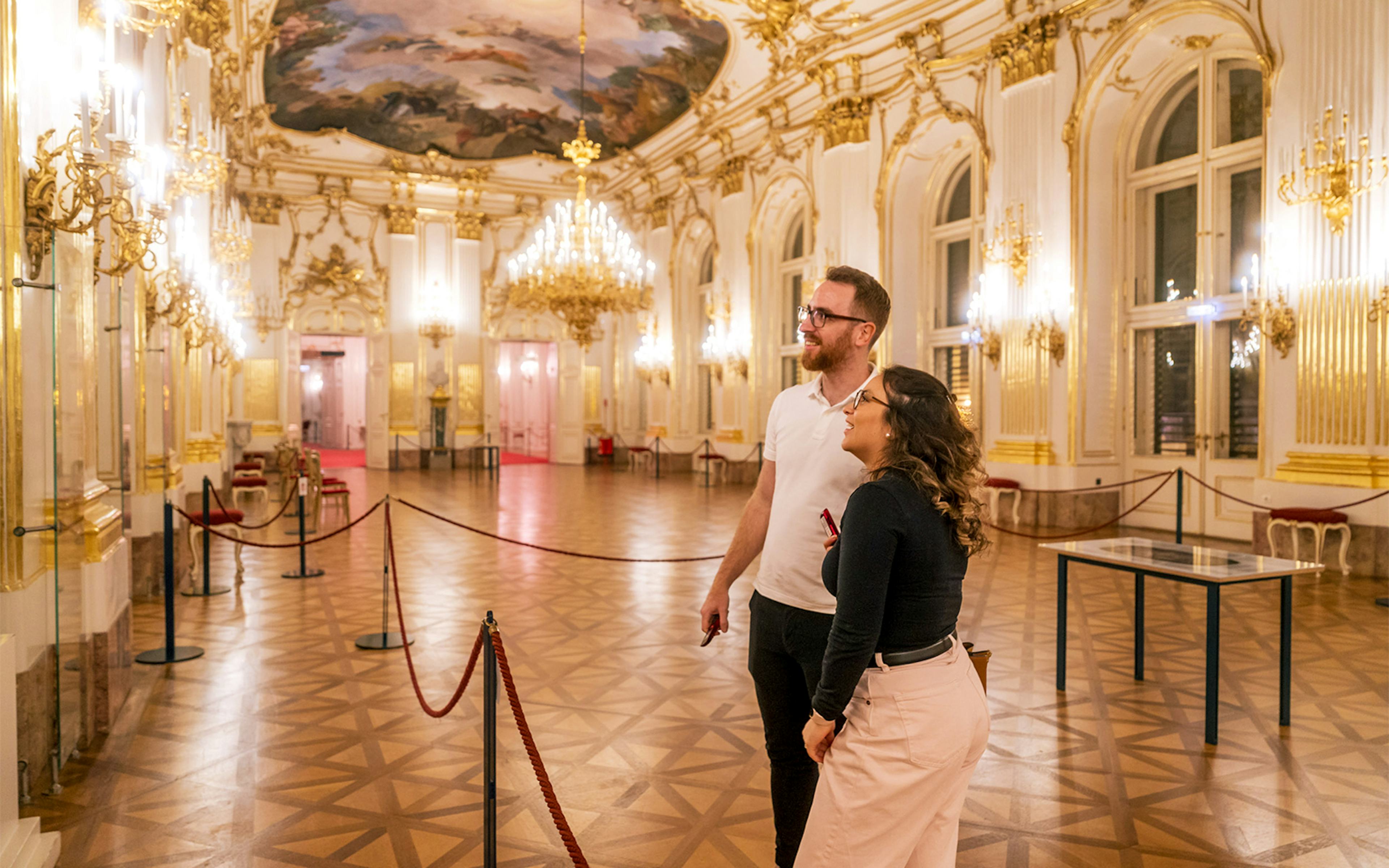
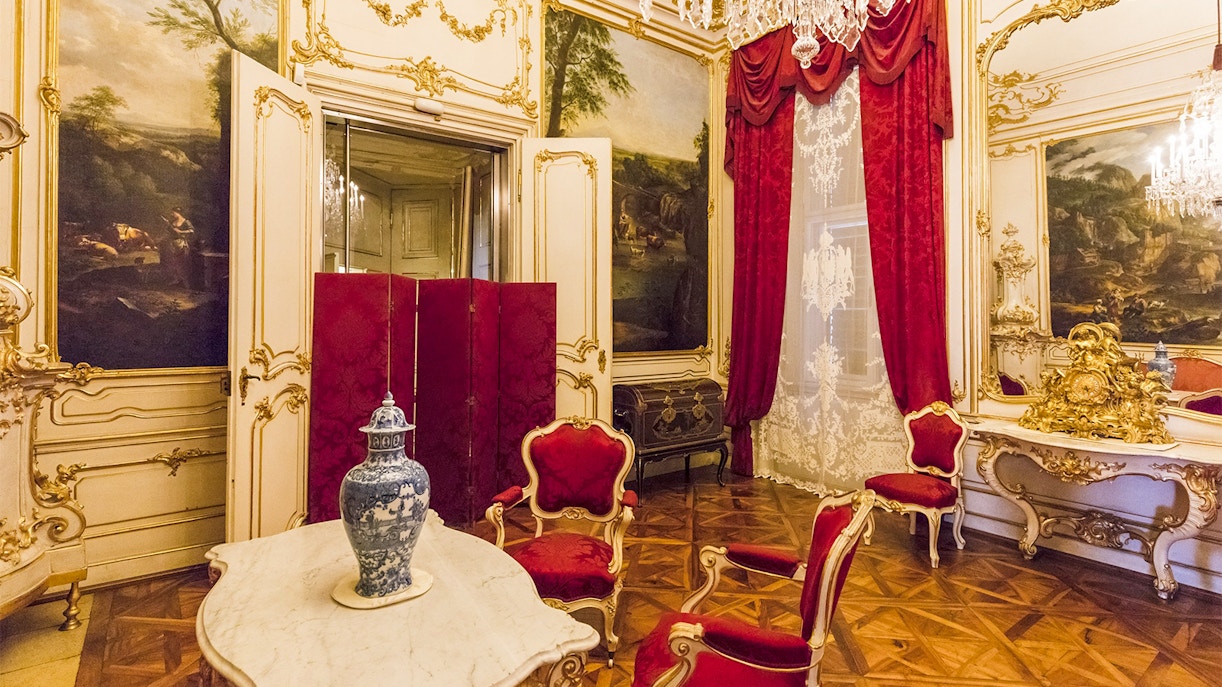
- Design style: High Baroque, featuring gilded stucco, ornate parquet flooring, and sparkling crystal chandeliers.
- Imperial function: Used for grand receptions, banquets, and political gatherings under the Habsburg dynasty.
- Unique feature: The mirrors directly face the tall windows, amplifying candlelight and making the room glow during evening festivities.
- Today: A highlight of Schönbrunn Palace tours, offering visitors a glimpse into the grandeur of Austria’s imperial past.
A Baroque gallery of illusions
The Hall of Mirrors at Schönbrunn Palace is an elegant 40-meter-long gallery, built in the early 18th century, lined with tall mirrors that multiply its gilded stucco, crystal chandeliers, and parquet floors into a dazzling illusion of infinite space. It was here in 1762 that a six-year-old Mozart performed before Empress Maria Theresa, cementing the hall’s place in both imperial and musical history.
Quick facts
Why the Hall of Mirrors is a must-see at Schönbrunn
1/5
Experience the grandeur of Baroque illusion
When it was completed in the early 18th century, the mirrored gallery was a calculated display of Habsburg wealth and innovation. At a time when candlelight was the primary source of evening illumination, the endless reflections created an otherworldly glow that stunned ambassadors and visiting nobility.
Walk the path of musical history
The hall gained fame in 1762 when a prodigious six-year-old Mozart performed before Empress Maria Theresa. According to accounts, the young composer leapt into the empress’s lap after playing, sealing his reputation as a child wonder. For music lovers, it’s a rare chance to be in the place where the course of history changed for one of the world’s greatest composers.
Discover the art of imperial entertaining
Beyond concerts, the Hall of Mirrors hosted countless diplomatic receptions and imperial banquets. In the 19th century, Emperor Franz Joseph used it as a reception hall where the mirrored walls amplified not only light, but also the presence of power. Every architectural detail, from the symmetrical mirrors to the lavish stucco, was meant to impress foreign dignitaries before a single word was spoken.
Marvel at details you can’t see in photos
In person, you’ll notice details often missed in pictures: the intricate parquet flooring crafted from exotic woods, the stucco reliefs framing each mirror, and chandeliers that hang like frozen cascades of crystal. Imagine candlelit evenings when wax dripped from hundreds of tapers and the mirrors magnified both flame and fragrance, surrounding you in a spectacle of light and scent.
A highlight of the Schönbrunn experience
While Schönbrunn boasts over 1,400 rooms, the Hall of Mirrors remains one of the palace’s most evocative. It captures the spirit of Vienna as a cultural and political capital, a place where art, music, and diplomacy converged. To step inside is to glimpse not just royal luxury, but the stagecraft behind an empire.
Queues at the Hall of Mirrors
Schönbrunn’s Hall of Mirrors is included in the sequence of State Rooms on the palace tour, meaning you can’t line up separately for this room. The queue isn’t outside the hall itself, but rather part of the steady single-file flow of visitors that moves from one stateroom to the next.
Since access is managed by Schönbrunn Palace timed-entry tickets, you usually won’t find people standing in a long queue outside the Hall of Mirrors. Instead, the ‘queue’ happens as clusters of tour groups pause at the entrance while guides give their explanations. This can create a brief jam, especially between June and August when multiple groups overlap.
What to expect
- Waiting time inside: You may need to wait 5 to 10 minutes just outside the doorway before entering, especially if a large group is still inside taking photos.
- Peak congestion: Midday (11am to 3pm) is the busiest, with the hall sometimes feeling packed shoulder-to-shoulder for a few minutes at a time.
- Quieter moments: Early entry slots (8:30am to 9:30am) or late afternoon visits (after 4pm) often allow you to slip into the hall with minimal waiting and far fewer people around.
Tips to manage the flow
- Step aside: Once inside, move toward the sides of the hall or under a chandelier to let groups pass through; this gives you a calmer space to look around.
- Pause at the doorway: If a large group is ahead, wait a minute or two; the hall empties in waves, and you’ll enjoy a better view without being jostled.
- Don’t rush past: Because the visit route is one-way, you can’t circle back. Give yourself an extra beat inside before moving on to the next room.
An empire’s image in glass and stucco
Rococo legacy and courtly rituals
- The Hall of Mirrors embodies the Rococo taste for elegance and lightness, with gleaming white-and-gold panelling, mirrored walls that multiplied candlelight, and later red silk-damask furnishings added under Emperor Franz Joseph.
Architectural and artistic roots
- In the mid-18th century, court architect Nicolaus Pacassi transformed Schönbrunn Palace, guiding its transition from Baroque grandeur to Rococo refinement with lighter decoration and refined detailing.
- The design reflects the Gesamtkunstwerk ideal, a ‘total work of art’, where architecture, decoration, and furnishings harmonize to create an immersive imperial showcase.
Interesting facts about the Schönbrunn Hall of Mirrors
1/5
Mozart’s leap
After performing here in 1762, a six-year-old Mozart reportedly leapt into Empress Maria Theresa’s lap to thank her, an audacious act that delighted the court and cemented his reputation as a child prodigy.
Candlelight and mirror maintenance
Evening events filled the hall with the glow of hundreds of candles. The smoke often blackened the mirrors and stucco, requiring constant cleaning by palace staff to preserve the dazzling effect of the reflections.
Wax drips and evening spectacle
During lavish candlelit events, hundreds of tapers were set into chandeliers and sconces. The heat caused wax to drip onto the parquet flooring and sometimes even onto guests’ clothes, a reminder that imperial glamour often came with a dose of discomfort.
18th-century imperfections
Several of the mirrors are original to the early 1700s. If you stand close, you can still spot slight ripples and distortions in the glass. These imperfections are clues to their age and craftsmanship, since hand-blown glass of that era was never perfectly smooth.
The Hall as a shortcut for children
Accounts from the 19th century note that the imperial children sometimes used the hall as a playful shortcut between rooms. The polished parquet once echoed with the hurried footsteps of children, a playful contrast to the solemn rituals that usually filled the hall.
Visitor tips
- Look for the original mirrors: Some of the mirrors are original 18th-century glass, with slight warping and imperfections. Stand close and you’ll notice the subtle waviness that modern replacements don’t have.
- Stand at the center of the hall: If you position yourself directly under a chandelier in the middle of the room, you’ll get the strongest effect of infinite reflections, just as courtiers would have seen during candlelit evenings.
- Trace Mozart’s legacy: Most Schönbrunn Palace guided tours point out where Mozart played for Maria Theresa, but if you’re on a self-guided visit, pause near the far end of the hall by the windows; that’s where the young prodigy is believed to have performed.
- Mind the lighting: Time your visit for late afternoon when sunlight slants through the windows and doubles in the mirrors to get an idea of how candlelight once transformed the space.
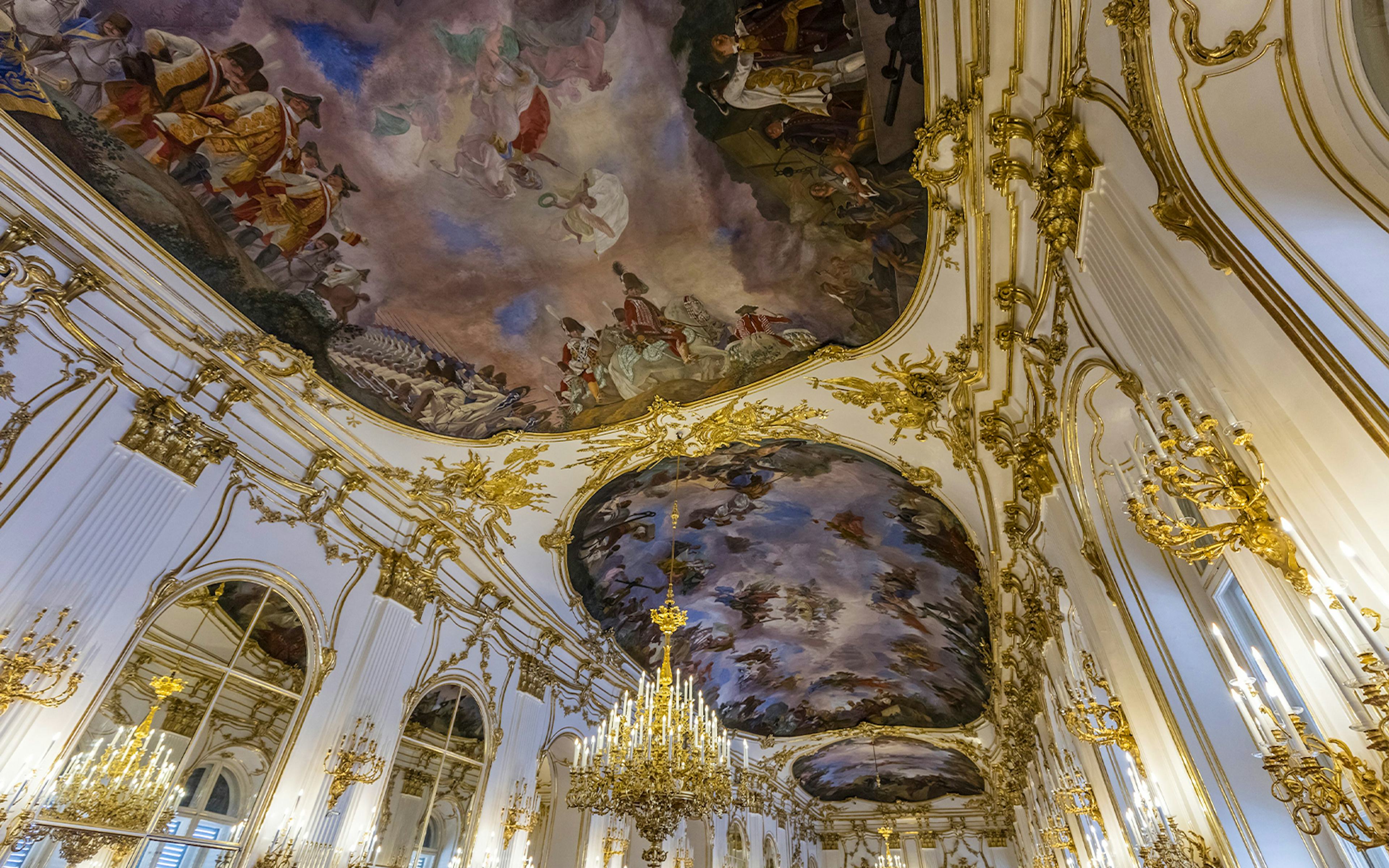
- Check the ceiling stucco: Most visitors focus on the mirrors, but the white-and-gold stucco frames above carry Rococo motifs that reveal the hall’s artistic shift from heavy Baroque to lighter, playful design.
A Viennese treasure among European mirror halls
Mirror halls were a hallmark of European court architecture, designed to project power through light, reflection, and spectacle. The most renowned example is the Hall of Mirrors at Versailles, a monumental Baroque gallery nearly 73 meters long, lined with 357 mirrors and conceived as the ultimate stage for Louis XIV’s self-image as the ‘Sun King’. Versailles overwhelms with scale and grandeur, a political theatre built to impress foreign dignitaries and cement the monarchy’s absolute authority.
Schönbrunn’s Hall of Mirrors, by contrast, is its Rococo counterpart, more intimate at 40 meters, lighter in tone, and designed for closer encounters between the emperor and his court. Here, the mirrors amplified candlelight, creating an elegant setting that fit Vienna’s mix of ceremony and sociability. While Versailles projected power on a continental scale, Schönbrunn became a uniquely Viennese space where politics, music, and ritual intertwined.
Frequently asked questions about Schönbrunn’s Hall of Mirrors
No, the Hall of Mirrors is not a standalone attraction. It is part of the State Rooms route, and access is only possible with a Schönbrunn Palace ticket. You cannot line up separately for this hall.
Yes. Whether you book a standard timed-entry ticket, a Schönbrunn Palace and Zoo combo ticket, or a Schönbrunn skip-the-line guided tour, all options grant entry to the State Rooms, which include the Hall of Mirrors.
Yes, Schönbrunn Palace guided tours usually pause in the hall while the guide explains its history and significance, so you may get a few extra minutes here compared to moving with the general timed-entry flow.
Yes. Schönbrunn Palace has lifts that make the State Rooms accessible, including the Hall of Mirrors. Mention your needs when booking or on arrival so staff can help with a smooth entry.
From April to October, expect heavy foot traffic between 10:30am and 3pm, when group tours overlap. Winter months (November to March) are noticeably calmer, with the quietest times on weekday mornings. Early entry at 8:30am or late entry after 4pm usually offers the best chance to enjoy the hall without crowds.
The visit follows a one-way route through the palace, so you can pause for about 5 to 10 minutes. If you want to take a closer look at the details, such as the stucco reliefs or parquet flooring, it is best to pause briefly at the sides and let tour groups pass.
Yes, you can click pictures inside the Schönbrunn Hall of Mirrors. However, please note that flash photography, tripods, selfie sticks, and commercial videography equipment are prohibited inside the palace.
Several of the mirrors date back to the early 18th century. If you look closely, you can spot subtle ripples and imperfections in the glass, evidence of hand-blown craftsmanship.
Yes. In 1762, six-year-old Mozart played for Empress Maria Theresa in the Hall of Mirrors, one of the earliest public moments that marked him as a prodigy.