When The Kiss debuted at the 1908 Kunstschau in Vienna, the Austrian state bought it before Klimt had fully completed the painting.
Witness The Kiss by Gustav Klimt in Vienna – A Symbolist Masterpiece
Gustav Klimt’s The Kiss (1907–1908) turns a 180 × 180 cm canvas into a radiant field of gold leaf, pattern, and intimacy. A defining work of Vienna Secession art, it shows a couple suspended between ornament and emotion, with flattened decoration giving way to tender faces, hands, and bare feet. First shown in 1908 and acquired that year for the Austrian state, it remains the Belvedere’s most sought-after painting—and one worth planning around.
Where is it located?
You’ll find it in the Klimt gallery within the Vienna around 1900 rooms of the Upper Belvedere in Vienna.
Tickets
Entry is included with a standard Upper Belvedere ticket; no separate pass is required. Timed entry applies, but once inside, your stay is unlimited.
Choose a two-step viewing position
Begin a few feet back to take in the painting’s square composition and the way the couple seems to fill the entire gold field. Then move closer to study the contrast between the patterned robes and the softly painted skin of the faces, hands, and feet.
Let the metallic surface settle before you photograph it
Personal photography without flash works best when you avoid standing directly in front for too long. Because gold and reflective surfaces catch gallery light differently as you move, a slight side angle often gives you a cleaner view and a better photo.
Visit outside midday peaks
The Upper Belvedere is busiest from late morning through early afternoon, especially on weekends and in the warmer months. For a calmer encounter with The Kiss, aim for the first entry slots or visit after about 4pm, when the Klimt rooms usually feel less compressed.
Use a guide for Vienna 1900 context
A guided tour adds useful context that is easy to miss when the room is crowded. The 1.5-hour Headout guided options connect The Kiss to Klimt’s Golden Phase, the Vienna Secession, and nearby works by Egon Schiele and Oskar Kokoschka.
Give the painting 20–30 minutes
Even if The Kiss is your main goal, it rewards a slower look. Set aside at least 20–30 minutes for the painting itself, and about 1.5–2 hours if you want to pair it with the Upper Belvedere’s palace interiors and neighboring galleries.
Continue through the nearby Klimt rooms
Don’t stop after the headline work. The Upper Belvedere holds the world’s largest Klimt collection, so viewing The Kiss alongside other Klimt paintings gives you a much clearer sense of how he moved between portraiture, symbolism, and decorative surface.
Did you know?
Bought before it was finished
A record-setting acquisition
The state paid 25,000 crowns for The Kiss, an exceptionally high sum for a painting in Austria at the time.
Gold and silver on canvas
Klimt combined oil paint with gold and silver leaf, giving the picture its jewel-like glow and making it one of the defining works of his Golden Phase.
A monumental square
The canvas measures 180 × 180 cm (5.9 × 5.9 ft). That nearly perfect square format gives the embrace an iconic, altar-like presence.
Pattern marks the two figures differently
The man’s robe is built from rectangles and black-white blocks, while the woman’s garment is filled with circles, flowers, and softer curves. Klimt uses ornament to distinguish energy, mood, and gender.
Byzantium helped shape it
Klimt’s fascination with gold surfaces deepened after he saw Byzantine mosaics in Ravenna. Their shimmering sacred backgrounds echo through The Kiss.
Naturalism appears only where it matters most
Much of the body disappears into decoration, but the faces, hands, and bare feet remain delicately modeled. That contrast makes the human contact feel even more intimate.
The setting is less serene than it first appears
The couple stands on a flowered patch that ends abruptly at a dark edge. The composition balances tenderness with a quiet sense of risk.
Story behind *The Kiss*
Vienna at the turn of the century
The Kiss emerged from Vienna around 1900, when artists were rethinking what modern art could be. Gustav Klimt had already broken with conservative institutions and helped found the Vienna Secession, a movement that embraced experimentation, symbolism, and design. Rather than separating fine art from decoration, Klimt treated them as equals. That cultural climate gave him room to make a painting as radical as The Kiss.
Klimt’s golden experiment
By 1907–1908, Klimt had entered what is now called his Golden Phase. He was exploring how gold leaf, flattened space, and ornamental pattern could transform a human subject into something both sensual and sacred. In The Kiss, the couple is not placed in a realistic room or landscape; they seem to hover in a field of gold, flowers, and emotional intensity. The effect is intimate, but also ceremonial.
The 1908 debut
The painting first appeared publicly at the Kunstschau in Vienna in 1908. Its reception was immediate and strong enough that the Austrian state purchased it during the exhibition. That mattered: a work that once stood at the cutting edge of modern taste was quickly recognized as a national treasure. It entered a public collection not after generations of approval, but in its own moment.
From modern provocation to cultural icon
Klimt’s art did not always meet with easy acceptance, and earlier works had drawn criticism for their sensuality and symbolism. The Kiss, however, became the rare picture that satisfied both avant-garde ambition and public admiration. Over time, it moved from being a bold modern statement to one of Austria’s most recognizable images. Reproductions spread far beyond museum walls, but the original still feels far more tactile and luminous in person.
Why Belvedere matters to its story
At the Belvedere, The Kiss is not isolated as a single famous image. It sits within a wider narrative of Vienna around 1900 and beside other Klimt works, allowing you to see it as part of an artistic world rather than as a stand-alone icon. That context changes the experience: the painting becomes less of a souvenir image and more of a turning point in modern art. Its present home helps explain both its beauty and its historical weight.
Who created *The Kiss*?
Gustav Klimt (1862–1918) was an Austrian painter and a leading figure of the Vienna Secession, the movement that pushed Viennese art beyond academic convention at the turn of the 20th century. In The Kiss, Klimt fused Symbolist meaning with decorative brilliance, using oil, gold leaf, and silver leaf to turn an intimate embrace into something almost sacred. Rather than modeling bodies in a fully naturalistic way, he let faces, hands, and feet emerge from a field of pattern, flattening space while heightening emotion. That balance between sensuality and abstraction also defines works such as Judith I, Portrait of Fritza Riedler, and the Beethoven Frieze. The Kiss belongs to Klimt’s celebrated Golden Phase, when Byzantine-inspired surfaces and bold ornament became central to his art. His influence runs far beyond Vienna: he helped redefine modern painting by proving that decoration, symbolism, and psychological depth could coexist in a single image.
Frequently asked questions about *The Kiss*
If you’re looking for the Klimt The Kiss museum in Vienna, head to the Upper Belvedere.
No. It’s included with standard Upper Belvedere admission, and timed-entry tickets are the usual way to visit.
Go at opening or after about 4pm. The Klimt rooms are busiest from late morning to early afternoon.
Plan 1.5–2 hours for the Upper Belvedere, or 20–30 minutes for the painting itself.
Yes, personal photography without flash is allowed. Tripods and obstructive photo setups are not.
Yes. The Upper Belvedere is wheelchair and pram accessible, with elevators and accessible restrooms.
Yes. Guided Headout tours are available, and audioguides can be purchased on-site.
Yes. It is part of the permanent collection, but conservation work or rehanging can occasionally affect display.
More reads
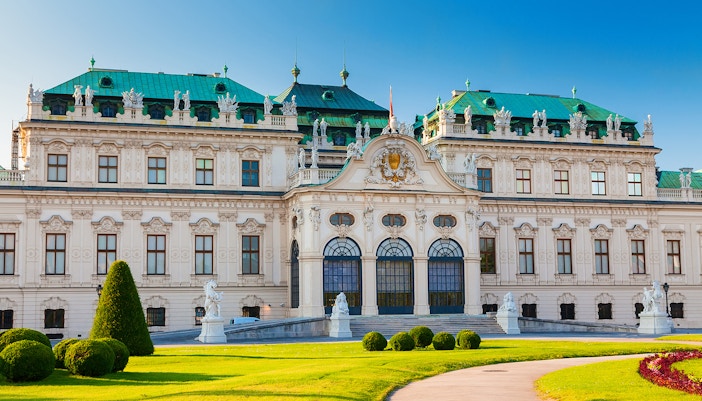
Upper Belvedere Palace Direct Entry Tickets
Headout experience ID: 21749
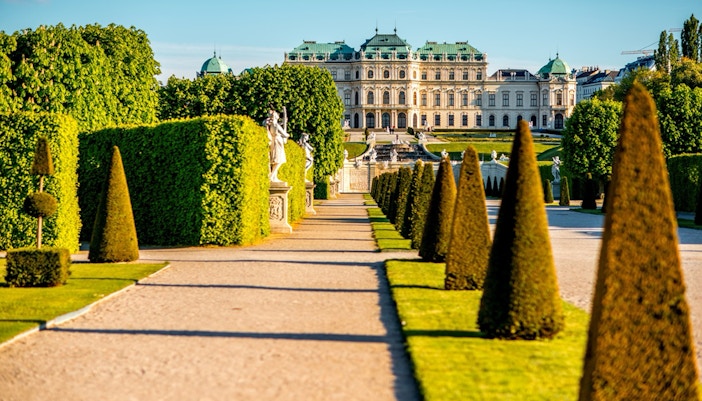
Upper Belvedere Palace & Gardens Guided Tour with Direct Entry
Headout experience ID: 26056
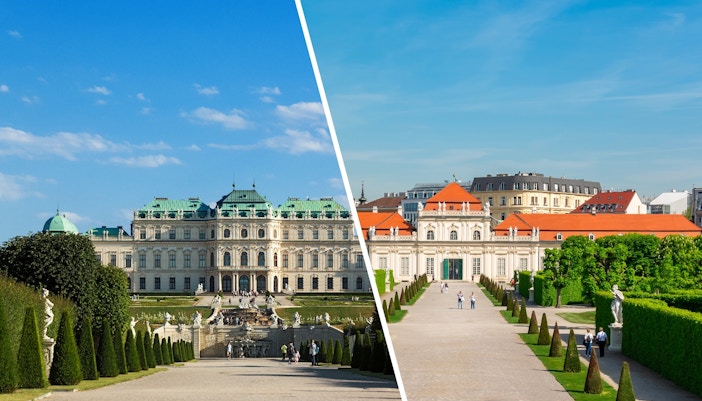
Combo (Save 8%): Direct Entry Tickets to Upper and Lower Belvedere Palace
Headout experience ID: 16876
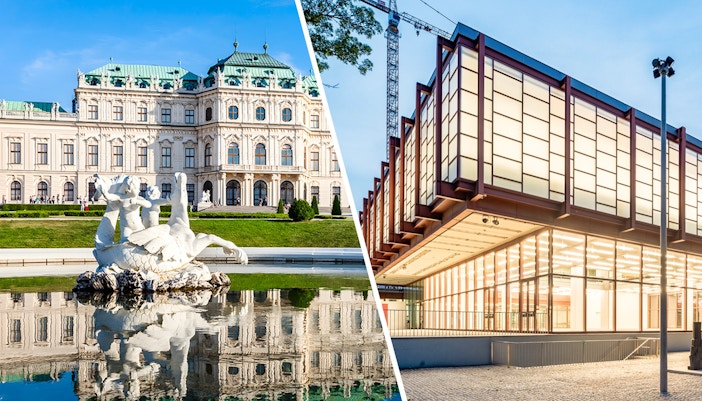
Combo (Save 5%): Upper Belvedere Palace + Belvedere 21 Musuem Direct Entry Tickets
Headout experience ID: 41507


