
The public visitor spaces do not operate as one single museum wing. The State Hall, branch museums, and temporary exhibitions can keep different daytime schedules, while research reading rooms follow separate academic access rules. If you are planning a same-day Hofburg route, check the current timings for the exact area you want to visit rather than relying on one library-wide opening pattern.
Explore the Austrian National Library in Vienna | Highlights, Visitor’s Guide and More
Crafted by Headout, a global experiences brand offering curated tours, tickets & experiences. Discover with ease, book with peace.Loved by over 57 million guests worldwide

A former imperial court library turned national cultural institution, this is both a working research library and a visitor-facing museum complex inside Vienna’s historic center. You come here to see the Baroque State Hall, browse exhibitions drawn from centuries of collecting, and understand how the Habsburg court used books, maps, and scholarship as part of imperial power. Public access is centered on exhibition spaces rather than everyday research rooms, so the visit feels closer to a museum than a campus library. What sets it apart is that the architecture and the collections tell the same story: knowledge on display as statecraft. This guide helps you decide what to see, how long to stay, and whether it fits your Vienna plans.
Why visit the Austrian National Library?

1/4
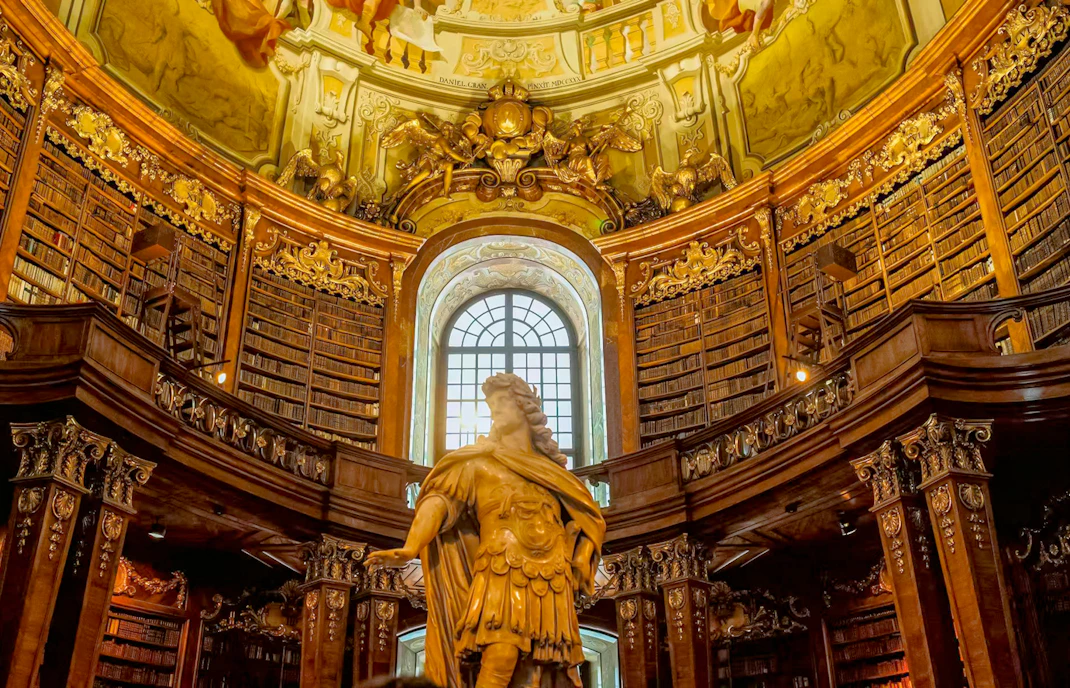
The State Hall is the main event
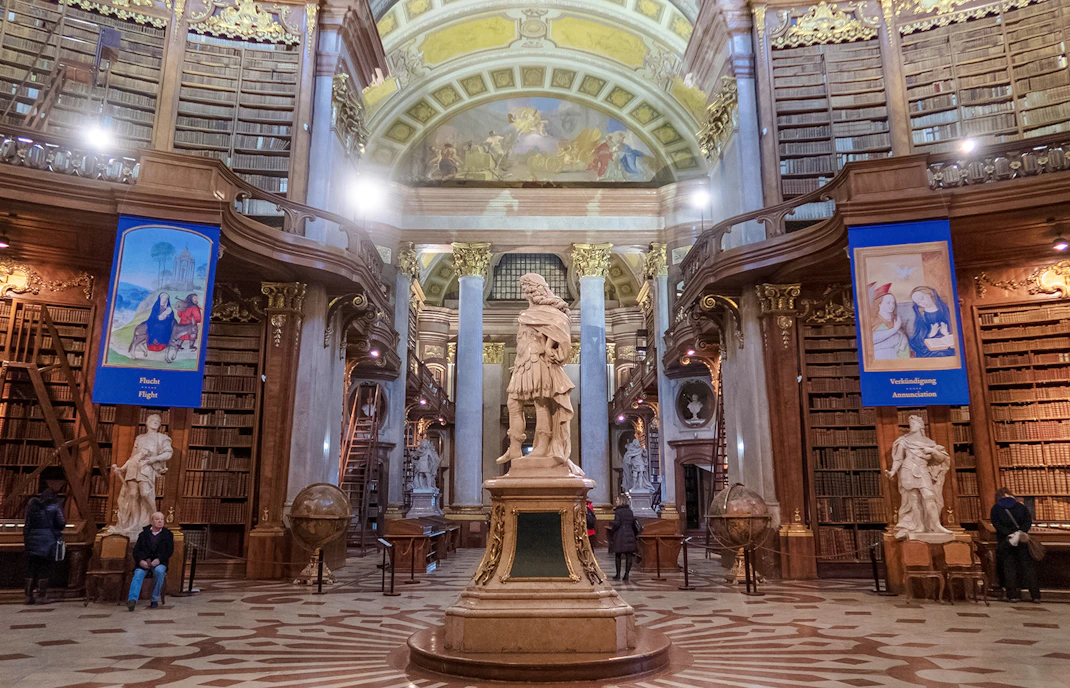
You are not looking at a neutral reading room. You are standing inside an 18th-century imperial hall where painted ceilings, carved shelves, and ranked volumes were designed to project order and prestige.
Its collections go far beyond books
The public museums attached to the library widen the visit from literature to world knowledge. Globes, papyri, maps, and manuscripts show how the court collected geography, language, science, and religion in parallel.
It fits neatly into a central Vienna day
The library sits within Vienna’s dense historic core, so you can pair it with the Hofburg, Heldenplatz, or the Spanish Riding School without adding a separate transit leg.
It suits slow-looking visitors more than restless ones
This is a contemplative indoor visit built around reading, looking, and quiet movement. If you want hands-on displays or a fast family attraction, other Vienna museums may hold attention more easily.
Plan your visit to the Austrian National Library
Opening hours

Best time to visit
Weekday mornings are the best choice if you want the State Hall before the central aisle fills with city-center sightseeing traffic. Late afternoon works well if you are folding the library into a Hofburg walk, but you will have less time for add-on museums and rotating exhibitions. If photography matters to you, go earlier, when the room feels calmer and sightlines are cleaner.
Location
The main visitor experience is in Vienna’s Innere Stadt within the Hofburg complex, a short walk from Heldenplatz, Michaelerplatz, and Stephansplatz. Herrengasse and Stephansplatz are the most useful metro reference points for a city-center approach on foot. Confirm the exact entrance for your booked area before arrival because the library’s museums and exhibition spaces are not all accessed through the same door. [Google Maps link] [Directions page]
What to do at the Austrian National Library
The State Hall
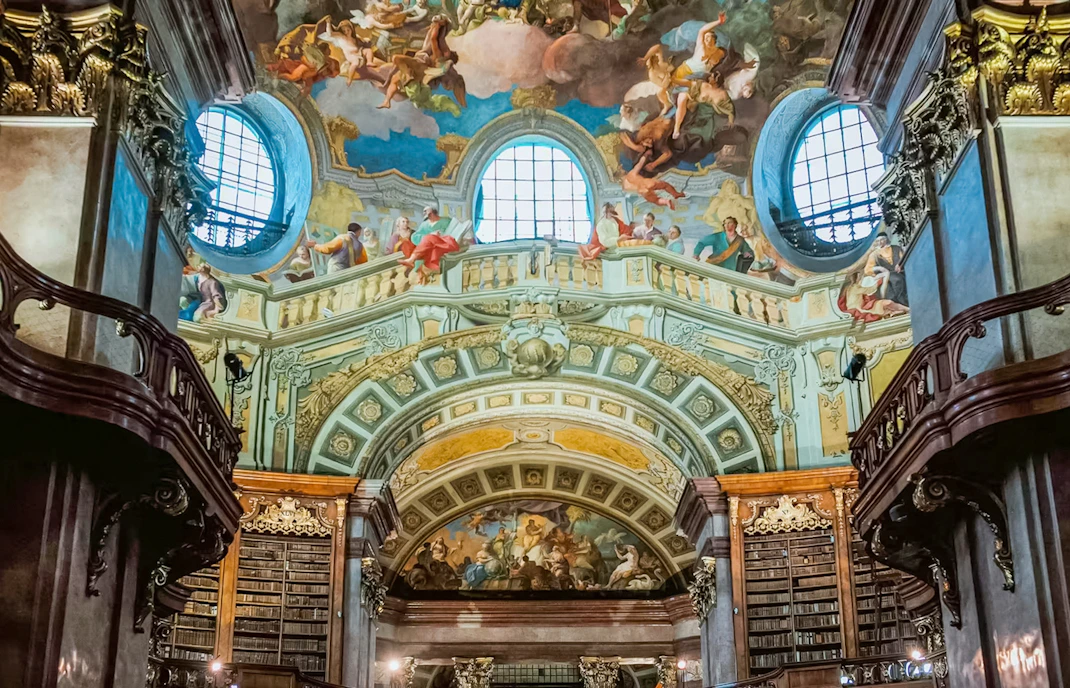
Start with the State Hall, because it is the room that explains the entire institution at a glance. You walk into a long Baroque space lined with historic volumes, marble statues, and a ceiling fresco that pulls your gaze upward before you notice the cases below. Give this room time. If you rush through for a single photograph, you will miss the details in the globes, bindings, and imperial imagery.
The Globe Museum
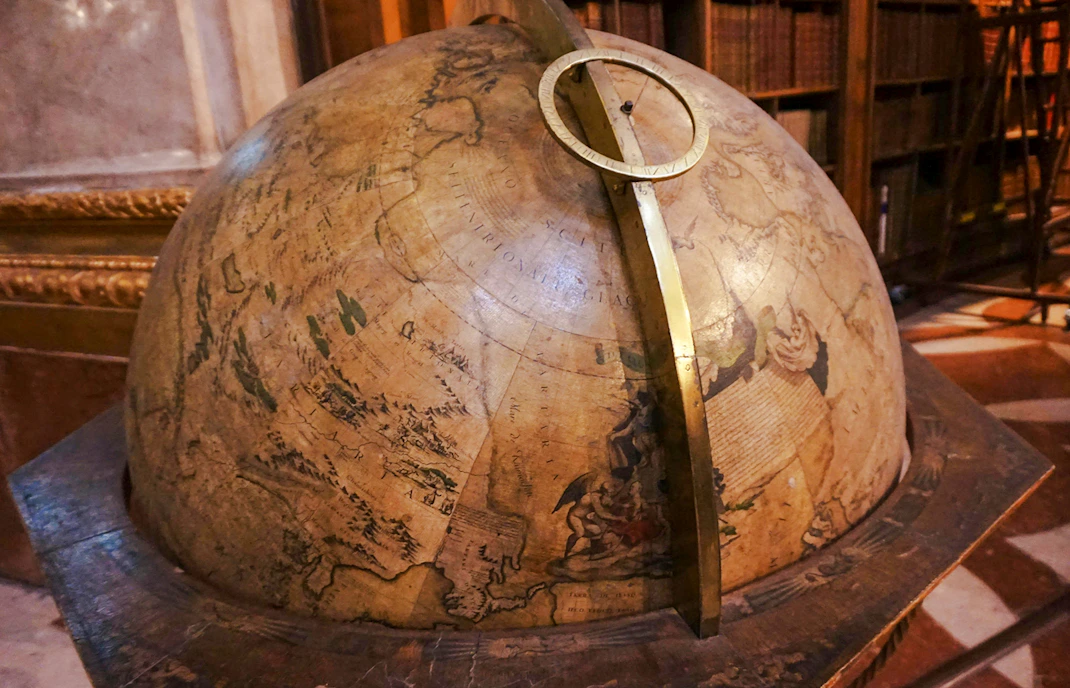
Continue with the Globe Museum if you want the collections to feel more tactile and worldly. Instead of one ceremonial space, you move through displays that show how people mapped, measured, and imagined the world across centuries. This is the easiest add-on if the State Hall left you wanting context rather than more architecture. It works especially well for visitors who like history of science and travel.
The Papyrus Museum
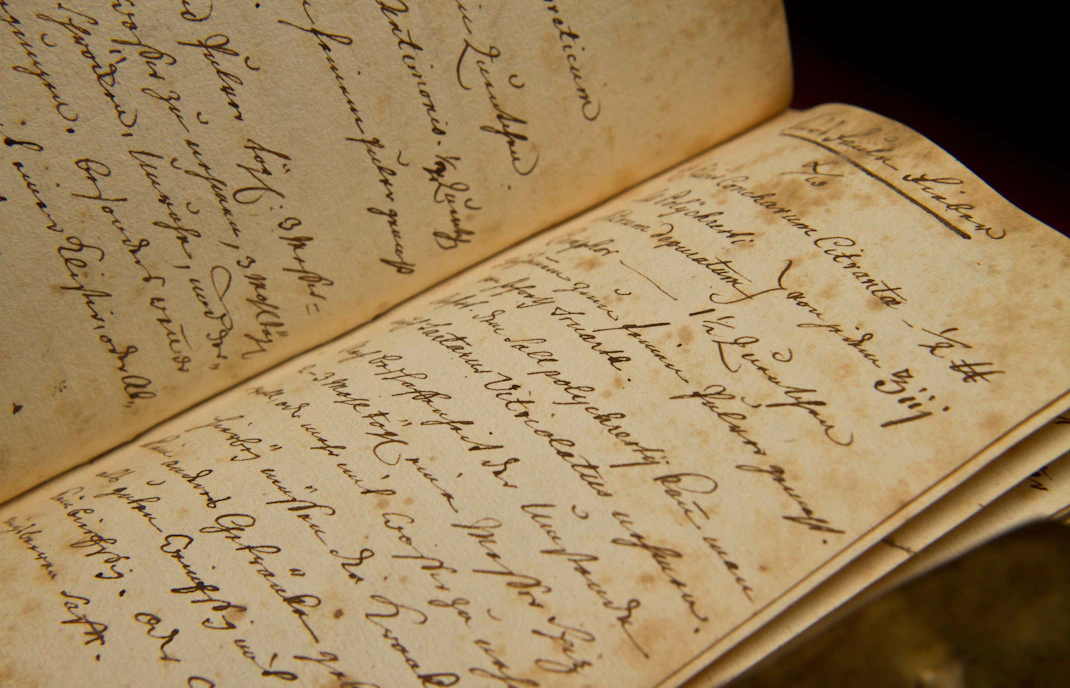
Add the Papyrus Museum if you want to see how fragile written history survives at material level. The focus shifts from grand interiors to small-format objects, scripts, and preservation. You spend more time reading labels here than simply looking up, which changes the rhythm of the visit in a good way. This is the strongest contrast to the State Hall and gives the broader institution real depth.
Temporary exhibitions and special displays
Check what temporary exhibitions are running before you book, because they can change the balance of the visit significantly. Some visitors come mainly for the Baroque hall and treat exhibitions as a bonus; others will find that a strong temporary show is what turns the library from a 45-minute stop into a half-day plan. If one exhibition matters to you, confirm its building and included access in advance.
The library began as the Habsburg court library, so its most famous public space was never designed as a plain storage room for books. The State Hall was built in the 18th century under Emperor Charles VI as an imperial statement in wood, fresco, and ordered knowledge, with architecture and collections reinforcing each other. That matters when you visit: the room is not only beautiful, it is political in the old dynastic sense. The shelving, dome painting, and formal symmetry all frame learning as part of rule. Later, the institution evolved from court possession into Austria’s national library, but the imperial logic is still visible in how the spaces present scholarship to the public.
Need to know
- A standard visitor visit is centered on public exhibition spaces such as the State Hall and museum areas, not on unrestricted access to working research rooms.
- Specific manuscripts, maps, and rare objects are not always on permanent view; fragile material rotates for conservation and exhibition planning.
- Photography rules can differ by space and exhibition. Flash, tripods, and filming are the first restrictions to check on arrival.
- The library system includes more than one public-facing site, so make sure your ticket matches the building or museum you actually want to enter.
Worth knowing
- If you only have 1 hour, do the State Hall first and add nothing else rather than trying to cover every museum quickly.
- The best photographs come from the central axis, but the side cases hold many of the objects that explain what the room was for.
- A strong temporary exhibition can change the value of the visit more than an Audioguide, so check the current program before choosing your ticket.
Frequently asked questions
It is best known for the State Hall — the former imperial court library — and for collections that extend beyond books into manuscripts, papyri, maps, and globes. [Visitor highlights page]
Unlike Vienna’s palace museums or art galleries, this visit is quieter and more text-based. You come for a ceremonial library interior and the history of collecting knowledge, not for paintings or furnished royal rooms. [Vienna culture guide]
Casual visitors can enjoy it easily because the public route is built around exhibition spaces, not academic procedures. Researchers use the institution differently, but you do not need specialist knowledge to appreciate the main halls. [Visitor guide]
Allow 45–60 minutes for the State Hall alone, and 90 minutes to 2.5 hours if you are adding one or more museum sections. The more you like reading exhibition labels, the longer you should plan. [Timings page]
The visitor experience is primarily self-guided, with interpretation coming from room texts, exhibitions, and occasional added formats such as Audioguides or special tours. Check what is currently offered for your date before booking. [Tickets page]
Accessibility depends on the specific building and exhibition area you plan to enter within the wider library system. Step-free routes and visitor facilities are best confirmed in advance for the exact site on your ticket. [Accessibility page]
Advance booking is the safer choice if you are traveling on a tight city-center schedule, visiting in peak season, or going mainly for a temporary exhibition. It also lets you match the right ticket to the right site. [Tickets page]
It works best for families with older children who are comfortable in quiet indoor spaces and interested in books, maps, or history. Younger children may connect more with the globes and visual displays than with the main hall alone. [Family planning guide]