Natural History Museum Vienna visitor guide
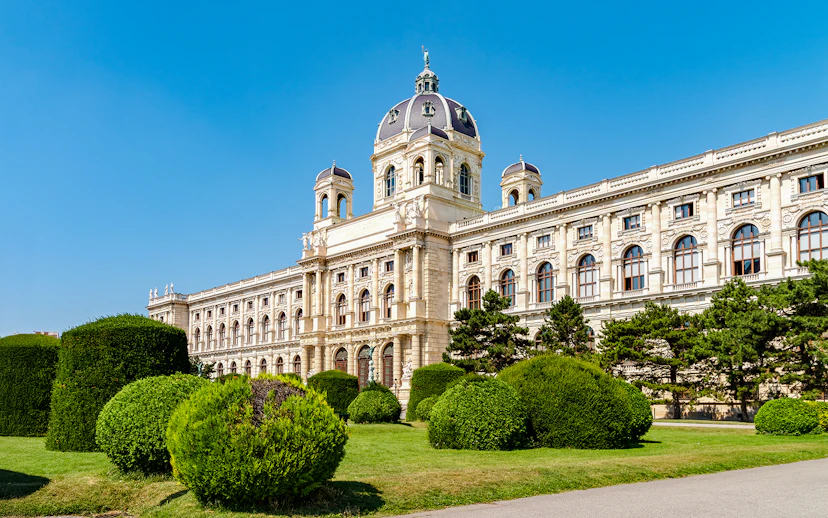
The Natural History Museum Vienna, or Naturhistorisches Museum Wien, is a vast Ringstrasse museum best known for the Venus of Willendorf, its dinosaur hall, and an exceptional meteorite collection. The visit feels more like moving through a 19th-century scientific palace than a modern hands-on museum, which is part of the appeal and part of the challenge. The biggest difference between a rushed visit and a good one is route order: if you leave Venus and Hall 5 for later, you’ll hit the worst crowd pockets. This guide covers timing, entrances, tickets, and the route that works best.
Quick overview: Natural History Museum Vienna at a glance
If you want the short version before you book, these are the decisions that will shape your visit most.
- When to visit: Wednesday 9am–8pm, Thursday–Monday 9am–6pm, closed Tuesday; weekday 9am–10:30am or after 4pm is noticeably calmer than Saturday and Sunday 10:30am–1pm, because coach groups, rainy-day visitors, and families bunch up at the same time.
- Getting in: From €18 for standard entry, with guided options from €24 total. You usually do not need to book far ahead for regular admission, but that changes on rainy weekends, school breaks, and if you want a fixed Roof Tour or planetarium slot.
- How long to allow: 2–3 hours works for most visitors. It stretches to 4+ hours if you want the gem halls, meteorites, prehistory, mammals, and the rooftop.
- What most people miss: Maria Theresa’s Bouquet of Jewels in Hall 4 and the Steller’s sea cow skeleton in Hall 34 both get overshadowed by dinosaurs and Venus, but they are 2 of the museum’s most memorable objects.
- Is a guide worth it? Yes if you want help navigating the older, German-heavy displays or want the rooftop context in English; otherwise, a good audio guide gives most visitors enough structure for less.
Jump to what you need
🕒 Where and when to go
🗓️ How much time do you need?
🎟️ Which ticket is right for you?
🗺️ Getting around
🦴 What to see
♿ Facilities and accessibility
Where and when to go
How do you get to Natural History Museum Vienna?
The museum sits on Maria-Theresien-Platz in central Vienna, between the Hofburg and MuseumsQuartier, about a 12–15 minute walk from Stephansplatz and 3 minutes from Volkstheater station.
Burgring 7, 1010 Vienna, Austria
→ Open in Google Maps
- U-Bahn: Volkstheater (U2/U3) → 3-minute walk → Use the exit toward MuseumsQuartier/Burggasse for the shortest approach.
- Tram: Burgring/Kunsthistorisches Museum stop → 2–3 minute walk → Best if you are already moving along the Ringstrasse.
- Taxi / rideshare: Drop-off on Burgring → 2-minute walk → Easier than Maria-Theresien-Platz if you have bags or a stroller.
Which entrance should you use?
There are 2 practical entrances, and the mistake people make most often is using the front steps with a stroller or wheelchair when the step-free side entrance is much easier.
- Main entrance: Located on Maria-Theresien-Platz. Best for most visitors arriving on foot from the square. Expect 0–10 minutes most mornings, and up to 15–30 minutes at the cashier on rainy weekends.
- Burgring 7 side entrance: Located on the Ringstrasse side. Best for wheelchairs, strollers, and anyone avoiding the main steps. Expect similar security timing, but easier access once inside.
When is Natural History Museum Vienna open?
- Wednesday: 9am–8pm
- Thursday–Monday: 9am–6pm
- Tuesday: Closed
- Last entry: 30 minutes before closing
When is it busiest? Saturday and Sunday from 10:30am–1pm, plus August, December, and Easter-period afternoons, are the tightest windows for the cashier, Hall 10, and the Venus Cabinet.
When should you actually go? Wednesday after 4pm or weekday 9am–10:30am gives you the easiest run at Venus, calmer stairway photos, and far more space in the meteorite hall.
How much time do you need?
| Visit type | Route | Duration | Walking distance | What you get |
|---|---|---|---|---|
Highlights only | Grand staircase → Hall 5 meteorites → Hall 10 dinosaurs → Hall 11 Venus Cabinet → Hall 34 sea cow → exit | 1.5–2 hours | ~2 km | You cover the 4 biggest payoffs fast, but you skip most mineralogy, anthropology, reptiles, and nearly all of the first-floor zoology loop. |
Balanced visit | Grand staircase → Halls 1–5 minerals and meteorites → Halls 6–11 dinosaurs and Venus → short café break → Halls 27–28 reptiles or Halls 33–39 mammals → exit | 2.5–3.5 hours | ~4 km | This adds the gemstone rooms, better pacing, and 1 solid first-floor wing, which makes the museum feel rounded rather than rushed. |
Full exploration | Full mezzanine loop → first-floor zoology and mammals → Microtheater or planetarium if timed → café break → Roof Tour meeting point → exit | 4.5–6 hours | ~5.5 km | This is the most rewarding version if you like natural history museums, but it is a lot of standing, and the rooftop or planetarium only works with separate add-on tickets. |
Which Natural History Museum Vienna ticket is best for you
| Ticket type | What's included | Best for | Price range |
|---|---|---|---|
Standard admission | Entry to all permanent halls + current main-building special exhibitions | A flexible self-guided visit where you want to move at your own pace and decide on the route once inside | From €18 |
Standard admission + Audio guide | Entry + audioguide | A first visit where German-heavy labels would otherwise leave too many gaps in the older galleries | From €21 |
Highlight guided tour | Entry + 50-minute museum guide | A shorter visit where you want someone else to pick the route and explain the Venus, meteorites, and dinosaurs efficiently | From €24 |
NHM + Narrenturm combo | Entry to Natural History Museum Vienna + entry to Narrenturm | A longer museum day where you want a second, very different collection without having to plan another ticket separately | From €22 |
Standard admission + Roof Tour | Entry + 50-minute Roof Tour | A visit where the dome interior, skyline views, and behind-the-scenes feel matter as much as the specimen halls | From €27 |
How do you get around Natural History Museum Vienna?
Museum layout
The museum is sprawling but logical once you understand it: the mezzanine level carries the strongest first-time route, and the first floor is where visits either deepen or drift.
The practical implication is simple: it is easy to self-navigate if you follow hall numbers, but it is also very easy to miss side rooms and cross-corridor displays that hold some of the best objects.
- Mezzanine level: Halls 1–5 cover minerals, gemstones, and meteorites → budget 45–60 minutes.
- Mezzanine level: Halls 6–11 move through geology, fossils, dinosaurs, and the Venus Cabinet → budget 45–60 minutes.
- Mezzanine level: Halls 12–15 continue into prehistory and anthropology → budget 20–30 minutes.
- First floor west loop: Halls 21–28 include the Microtheater, reptiles, and newer life-science displays → budget 30–45 minutes.
- First floor east loop: Halls 33–39 hold the mammals, including the Steller’s sea cow and elephant seal → budget 30–45 minutes.
Suggested route: start with Hall 5 and Hall 11 while your attention is fresh, then decide whether your second half should be mammals or reptiles; most visitors lose time by overcommitting to early mineral cases and arriving at Venus when the cabinet is full.
Maps and navigation tools
- Map: Printed floor plans are available at the info desk and downloadable from the museum website, so get one before you start the mezzanine loop.
- Signage: Hall numbering is good, but it does not always call out the side-room highlights clearly, so a map genuinely helps here.
- Audio guide / app: Audioguides are available in English and other major languages, and they add real value if you do not read German confidently.
💡 Pro tip: Photograph the floor plan before you leave the entrance hall — the Venus Cabinet and several cross-corridor cases are easy to walk past when you follow the main loop too literally.
Where are the masterpieces inside Natural History Museum Vienna?

Venus of Willendorf
Era: c. 29,500 years old
This tiny Paleolithic figurine is the museum’s most famous object, and it is far smaller in person than most visitors expect. The room is intentionally dim and red-lit, which makes the moment feel focused but also slows the queue. What many people miss is that the older figurine nicknamed Fanny stands in the same cabinet and is worth the extra minute.
Where to find it: Hall 11, inside the dedicated Venus Cabinet off the prehistory route
Hall 5 meteorites
Collection: 1,100+ meteorites on public display
This is one of the museum’s true global claims, and even visitors who do not think they care about rocks usually end up staying longer here. The room jumps from giant historic falls to lunar and Martian material, so it feels more varied than a standard geology hall. Many people rush past without realizing the 300 kg Knyahinya stone and the 1751 Hraschina iron are the anchors.
Where to find it: Hall 5 on the mezzanine, just before the geology and dinosaur sequence
Maria Theresa’s Bouquet of Jewels
Era: c. 1763
This gemstone bouquet is one of the museum’s most surprising objects because it feels halfway between natural history and imperial love token. At first glance it is just spectacular craftsmanship, but the details are what make it linger: look for the gem-set insects tucked into the leaves. It is easy to miss because many visitors have not settled into the museum yet when they pass Hall 4.
Where to find it: Hall 4 in the mineral and gemstone galleries
Allosaurus animatronic
Species: Allosaurus fragilis
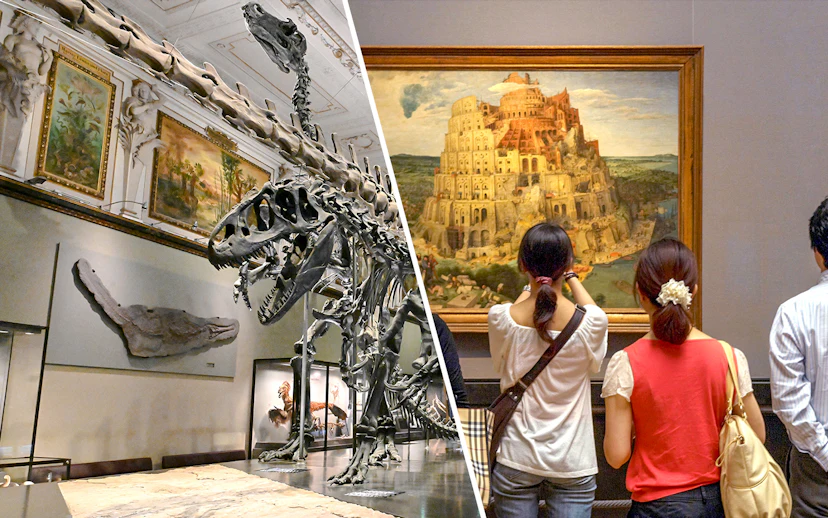
This is the single most effective family stop in the museum and the reason many children remember Hall 10 best. The moving model gathers a crowd when it activates, then people disperse fast, so the trick is to wait a minute if it has just gone quiet. Most visitors photograph it once and miss the full movement cycle, including the tail and head action.
Where to find it: Hall 10 in the dinosaur gallery
Steller’s sea cow skeleton
Species: Hydrodamalis gigas
This is one of the museum’s most important first-floor objects and also one of the easiest to skip because it sits well beyond the headline rooms. The significance is serious: it is the world’s only complete displayed skeleton with pelvic bones of an animal driven to extinction in the 18th century. Many visitors notice the scale, but not the pelvis fragments that make it so exceptional.
Where to find it: Hall 34 on the first-floor mammals route
Cupola Hall and Hans Canon’s ceiling fresco
Artist/era: Hans Canon, 19th-century historicist interior
The building itself is part of the collection here, and the grand staircase plus dome interior are among the museum’s real highlights. The ceiling painting and monumental space explain why so many visitors come away talking about the architecture as much as the specimens. Most people photograph from the bottom of the stairs, but the better view is from the top landing looking up and back.
Where to find it: At the top of the grand staircase in the central Cupola Hall
Facilities and accessibility
- 🎒 Cloakroom / lockers: A staffed cloakroom and €1 or €2 coin lockers sit to the right of the entrance hall, and large bags, umbrellas, tripods, and wet outerwear must be checked.
- 🚻 Restrooms: Restrooms are available on each floor near the central staircase, and you do not need to leave the main route to reach them.
- 🍽️ Café / restaurant: The Café Restaurant in der Kuppelhalle serves coffee-house classics, cakes, soups, and mains, and it is worth using for the setting more than for low prices.
- 🛍️ Gift shop / merchandise: The entrance-hall shop is one of the museum’s strengths, especially for fossils, dinosaur toys, Venus souvenirs, and good German and English books.
- 🪑 Seating / rest areas: The best sustained seating is under the dome in the café, while benches in the galleries are more limited and better for short pauses than long breaks.
- ♿ Mobility: Use the step-free side entrance at Burgring 7, then the elevators to reach the public floors; most of the museum is accessible, but the Roof Tour is not.
- 👁️ Visual impairments: A Braille map is available at the info stand, a tactile path covers 15 exhibits, and assistance dogs are allowed throughout the museum.
- 🧠 Cognitive and sensory needs: Weekday 9am–10:30am and after 4pm are the easiest low-crowd windows, while the dinosaur hall, the central staircase, and the Venus Cabinet are the most stimulating spaces.
- 👨👩👧 Families and strollers: Strollers are easiest through the Burgring 7 entrance, baby-changing facilities and highchairs are available near the café, and limited stroller parking may be used on busy days.
This museum suits school-age children especially well because the dinosaurs, meteorites, and giant mammals are memorable quickly, but the dense older cabinets can lose very young attention if you try to do everything.
- 🕐 Time: 1.5–2.5 hours is realistic with young children, and Hall 10 dinosaurs, Hall 5 meteorites, and the mammals floor are the best priorities.
- 🏠 Facilities: Baby-changing tables, highchairs, restrooms on each floor, and an easy café break under the dome make family pacing straightforward.
- 💡 Engagement: Wait for a full Allosaurus movement cycle and compare Venus with Fanny in the same cabinet, because children respond well when the visit turns into spot-the-difference.
- 🎒 Logistics: Use the Burgring 7 entrance with a stroller, keep bags small, and skip the planetarium unless you are comfortable with German or plan to use the English audio guide.
- 📍 After your visit: MuseumsQuartier is only a few minutes away and gives children room to run around after a dense indoor visit.
Rules and restrictions
What you need to know before you go
- Entry requirement: Standard admission is flexible, but reduced tickets and free under-19 entry require proof of age or eligibility.
- Bag policy: Large bags, suitcase-size backpacks, umbrellas, tripods, and wet outerwear must be checked at the cloakroom or lockers before you enter the halls.
- Re-entry policy: Same-day re-entry is generally possible if you keep your ticket stub and confirm with staff before leaving, which matters if you plan to step out for a cheaper meal.
Not allowed
- 🚫 Food and drink: Food and drinks are not allowed in the galleries, so plan snacks for before or after the visit and use the café for indoor breaks.
- 🚬 Smoking and vaping: Smoking and vaping are not allowed inside the museum building.
- 🐾 Pets: Pets are not allowed inside, but assistance dogs are permitted.
- 🖐️ Touching exhibits: Do not touch specimens, cases, or historic interiors, because many objects are fragile and the building itself is part of the museum experience.
Photography
- Personal handheld photography is generally allowed in the permanent galleries.
- Flash and tripods are not allowed, and special exhibitions or ticketed spaces can apply stricter room-by-room rules, so check posted signage rather than assuming the same rule holds everywhere.
Good to know
- The bird halls, Halls 29–32, are closed for renovation until September 29, 2026, so older guides overstate how much first-floor zoology is currently open.
- The planetarium and many in-house family programs run in German, so always check language before paying for add-ons.
Practical tips
- If you only book 1 thing in advance, make it the Roof Tour or a specific planetarium slot; regular admission rarely sells out, but the English rooftop timing is the add-on most likely to fill first.
- Start with Hall 11 before 11am if the Venus of Willendorf matters to you, because the cabinet is tiny and the line grows faster there than almost anywhere else in the museum.
- Save your concentration for Hall 5 and the prehistory rooms; many visitors spend too long in the early mineral cases, then rush the sections they came for.
- Bring a small bag and check umbrellas or bulky layers immediately, because the security process is light but the cloakroom rules are stricter than many first-time visitors expect.
- Eat before 12 noon or after 2pm if you plan to use the dome café, since the room is at its nicest outside lunch rush and least enjoyable when you are waiting for a table.
- In July and August, the Wednesday late opening is the smartest slot, because the building can run warm and the 4pm–8pm window feels noticeably easier than weekend midday.
What else is worth visiting nearby?
Commonly paired: Kunsthistorisches Museum Vienna
Kunsthistorisches Museum Vienna
Distance: 150 m — 2-minute walk
Why people combine them: They are literal twin buildings facing the same square, so this is Vienna’s easiest same-day museum pairing if you want art and natural history without extra transit.
✨ Natural History Museum Vienna and Kunsthistorisches Museum Vienna are most commonly visited together — and simplest to do on a combo ticket. The combo keeps the day to 1 square, 2 museums, and no extra logistics.
→ See combo options
Commonly paired: Hofburg Palace
Hofburg Palace
Distance: 500 m — 6-minute walk
Why people combine them: The walk is short, the imperial context overlaps naturally, and the shift from Habsburg court life to Habsburg-era science feels like a coherent Vienna day.
Also nearby
Museums Quartier
Distance: 250 m — 3-minute walk
Worth knowing: It is the easiest post-museum decompression stop for coffee, modern art, or just open courtyard space after a dense indoor visit.
Albertina
Distance: 850 m — 10-minute walk
Worth knowing: It works best if you want to pivot from specimens to paintings and prints without leaving central Vienna.
Eat, shop and stay near Natural History Museum Vienna
- On-site: Café Restaurant in der Kuppelhalle, Viennese coffee-house classics and light mains, $$, worth it for the dome setting more than for value.
- Café Leopold (5-minute walk, Museumsplatz 1, 1070 Vienna): Casual café-brasserie, $$, useful for a quick lunch in MuseumsQuartier before or after the museum.
- Glacis Beisl (6-minute walk, Museumsplatz 1, 1070 Vienna): Austrian, $$–$$$, a better pick for a slower post-museum meal and especially good in warmer weather.
- Café Eiles (10-minute walk, Josefstädter Str. 2, 1080 Vienna): Classic Viennese café, $$, a smarter coffee-and-cake stop if you want charm without paying mainly for museum atmosphere.
- 💡 Pro tip: Eat before 12 noon or after 2pm if you stay on-site, because the dome café bottlenecks at lunch and nearby MuseumsQuartier tables are easier to get later.
- NHM Shop: Fossils, dinosaur toys, Venus souvenirs, and strong German and English book shelves, directly off the entrance hall.
- Kunsthistorisches Museum shop: Art books, elegant gifts, and a quieter alternative if you want something less specimen-focused, just across Maria-Theresien-Platz.
- MuseumsQuartier stores: Design-led gifts and small creative shops, useful if you want a Vienna-made souvenir rather than a museum keepsake.
This is a very practical place to stay if your trip is museum-heavy and you want to walk almost everywhere. You are on the edge of the Innere Stadt, next to MuseumsQuartier, and close to U2 and U3, so the logistics are excellent. The drawback is price: it is usually more convenient than good-value.
- Price point: Mostly upper-mid-range to premium, with occasional business-hotel deals outside the busiest weekends and holiday periods.
- Best for: Short Vienna stays where you want the museum district, Hofburg, and central sights within an easy walk.
- Consider instead: Neubau for better cafés and boutique stays, or Mariahilf for stronger value and easier evening food options.
Frequently asked questions about visiting Natural History Museum Vienna
Most visits take 2–3 hours, though 4–5 hours is realistic if you want the full mezzanine loop, mammals, and a rooftop or planetarium add-on. The museum has 39 halls, and the dense cabinet displays slow people down more than they expect once they reach Hall 5 and the prehistory rooms.
No, you usually do not need to book standard admission far in advance. Walk-up entry is normally fine, but booking ahead makes more sense on rainy weekends, school-break mornings, and any day you want a fixed Roof Tour or planetarium slot rather than just general entry.
Usually not, at least not in the way it is at Vienna’s most crowded timed-entry sights. Online tickets mainly save the cashier line, which can hit 15–30 minutes on busy rainy weekends, but weekday mornings often have little or no ticket wait and security still takes a few minutes.
Arrive 10–15 minutes early if you already have a mobile ticket, and 20–30 minutes early if you still need the cashier. That leaves enough time for security, lockers, and finding the staircase without starting your visit already rushed.
Yes, you can bring a small bag or backpack into the galleries. Large bags, suitcase-size backpacks, umbrellas, tripods, and wet outerwear must be checked at the cloakroom or lockers before you enter the exhibition halls.
Yes, personal handheld photography is generally allowed in the permanent halls. Flash and tripods are not allowed, and special exhibitions or individual rooms can post stricter rules, so check signs when you move between spaces rather than assuming the same rule applies everywhere.
Yes, groups can visit, and the museum also offers group-guided options. If you are traveling with 15 or more people, reduced admission can apply, but groups move much better if they decide on lockers, add-ons, and a meeting point before they hit the entrance hall.
Yes, it is one of Vienna’s better family museum visits, especially for children around 6–12 years old. Dinosaurs, meteorites, and giant mammals land quickly, but the older, label-heavy cabinets can feel long for very young children unless you keep the route tight and focused.
Yes, most of the museum is wheelchair accessible through the Burgring 7 side entrance. Elevators reach the public floors and accessible restrooms are available, but the Roof Tour is not wheelchair accessible and the main front entrance is not the easiest approach.
Yes, there is food inside the museum and better-value options within 5–10 minutes on foot. The dome café is memorable for the room rather than the pricing, so many visitors use it for coffee and cake, then eat in MuseumsQuartier before or after the visit.
Only partly, so do not assume everything is fully bilingual. Some key rooms are easier for English-speaking visitors, but many older labels still lean heavily on German, which is why the audioguide is worth considering if you want more than a visual sweep.
Not fully, because most planetarium programs are presented in German. An English audio guide is available for many shows, but if language matters to you, confirm the setup before you buy the add-on rather than assuming it will work like a standard English screening.