Imperial Carriage Museum Vienna visitor Guide
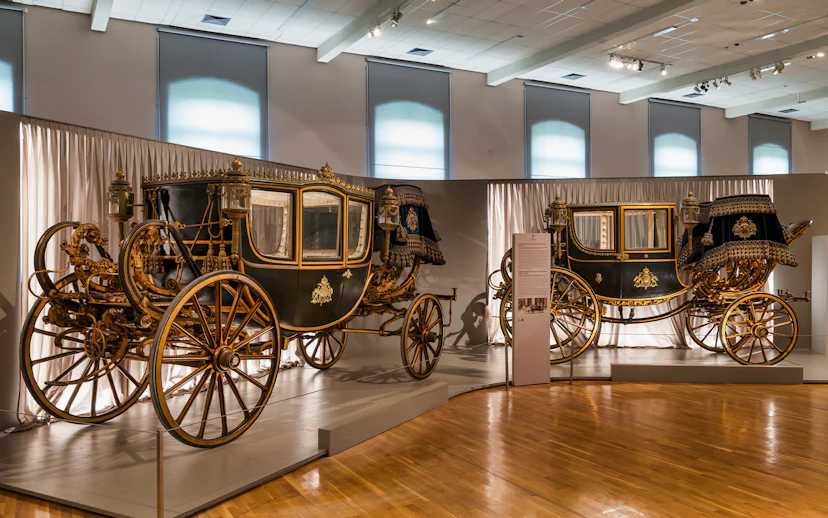
The Imperial Carriage Museum is a compact specialty museum at Schönbrunn best known for its glittering state coaches, Sisi collection, and the black court hearse of the Habsburgs. It’s easy to underestimate because the visit is short, but the details reward slow looking more than speed. The biggest difference between a forgettable visit and a great one is not skipping the upstairs Sisi section after the main hall. This guide helps you time your visit, choose tickets, and know what to prioritize.
Quick overview: Imperial Carriage Museum at a glance
If you’re fitting this into a Schönbrunn day, this is one of the easiest Vienna museum visits to plan well.
- When to visit: Wednesday–Monday: 9am–5pm; Tuesday: closed. The first hour after opening is noticeably calmer than late morning, because palace visitors haven’t yet started drifting over after their Schönbrunn tours.
- Getting in: From €12 for standard entry. Guided experiences that bundle Schönbrunn Palace and the museum usually start from about $70. You can often book close to your visit, but timed tickets still make sense in spring and summer when Schönbrunn as a whole is busiest.
- How long to allow: 30–60 minutes for most visitors. It stretches toward the longer end if you read the labels closely and spend time in the upstairs Sisi gallery.
- What most people miss: The upstairs Sisi Path, the tiny children’s carriages, and the 1914 imperial automobile are easy to rush past after the golden state coaches downstairs.
- Is a guide worth it? A full guide is most useful if you want deeper Habsburg context; for most visitors, the museum works well self-guided, and an audio guide gives enough extra detail for less.
Jump to what you need
🕒 Where and when to go
🗓️ How much time do you need?
🎟️ Which ticket is right for you?
🗺️ Getting around
♿ Facilities and accessibility
Where and when to go
How do you get to the Imperial Carriage Museum?
The museum sits inside the Schönbrunn Palace grounds in Hietzing, on the west side of the estate near the Hietzing gate, about 15 minutes from central Vienna by U-Bahn.
- Metro: Hietzing station (U4) → 6-minute walk → use the park-side exit for the shortest approach.
- Metro: Schönbrunn station (U4) → 10-minute walk → useful if you’re coming from the main palace side.
- Tram / bus: Hietzing, Schönbrunn stop → short walk → served by tram lines 10 and 60, plus bus 10A.
- Taxi / rideshare: Drop at the Schönbrunn or Hietzing side gate → 6–10-minute walk depending on your entry point.
Which entrance should you use?
The museum has its own separate entrance inside the Schönbrunn grounds, and the main mistake is assuming your palace entrance is also the museum entrance. It isn’t, so build in a few extra walking minutes if you’re coming from a palace tour.
- Located at: the separate Wagenburg entrance on the west side of the Schönbrunn estate. Expect: under 10 minutes’ wait even on summer afternoons.
When is Imperial Carriage Museum open?
- Wednesday–Monday: 9am–5pm
- Tuesday: Closed
- Last entry: Around 30 minutes before closing is the safest cut-off for a full look around
When is it busiest? Late morning from April to August is the busiest window, especially once Schönbrunn Palace tours start emptying into the grounds and casual visitors add the museum as an extra stop.
When should you actually go? Go right at opening or in the last hour before closing if you want the best chance of seeing the Imperial State Coach and Sisi displays without people clustering around them.
How much time do you need?
| Visit type | Route | Duration | What you get |
|---|---|---|---|
Quick visit | Imperial carriages → Coronation coach highlights → Sisi exhibits | 45 mins–1 hr | A fast-paced overview of the museum’s most famous royal carriages and key Habsburg artifacts; ideal if you’re combining it with other Schönbrunn attractions |
Standard visit | Imperial coaches → Ceremonial carriages → Empress Elisabeth collection → Multimedia displays | 1.5–2 hrs | Enough time to comfortably explore the museum’s major exhibits, learn about royal court life, and appreciate the craftsmanship behind the carriages |
In-depth visit | Full carriage collection → Historical exhibits → Sisi collection → Detailed exhibit reading → Photo stops | 3+ hrs | A complete experience covering the evolution of imperial transport, Habsburg ceremonies, and the museum’s finest decorative details at a relaxed pace |
Which Imperial Carriage Museum ticket is best for you
| Ticket type | What's included | Best for | Price range |
|---|---|---|---|
Standard Entry Ticket | Timed entry + access to all permanent exhibits | A short, self-guided visit where you want the main collection without committing to other imperial sites | From €12 |
How do you get around Imperial Carriage Museum?
Layout and suggested route
The museum is compact and split across a main carriage hall and an upper gallery, so it’s easy to self-navigate as long as you don’t treat the upstairs level as an afterthought.
- Main hall: State coaches, gala carriages, the black court hearse, children’s carriages, and the 1914 imperial automobile → budget 25–35 minutes.
- Upper gallery: Sisi Path displays, dresses, riding gear, uniforms, portraits, and the modern Ferdinand Habsburg race car → budget 15–20 minutes.
Suggested route: Start with the Imperial State Coach while the hall is quiet, move through the hearse and children’s vehicles in order, then finish upstairs with the Sisi section so the personal objects and film add context to everything you’ve just seen below.
Maps and navigation tools
- Map: The route is simple enough that you won’t need a full museum map, but the entrance orientation point helps you decide whether to head straight to the main hall or upstairs later.
- Signage: In-museum wayfinding is good, and the English/German labels are detailed enough for most self-guided visits.
- Audio guide / app: Audio guides are available in multiple languages and add the most value in the Sisi and ceremonial coach sections, where context matters more than object count.
💡 Pro tip: Don’t leave after the ground floor. The upstairs Sisi gallery is where the museum shifts from ‘beautiful coaches’ to a fuller story about the people who used them.
Where are the masterpieces inside Imperial Carriage Museum?

Imperial State Coach
Era: Baroque, around 1735–1740
This is the museum’s showstopper: a massive gilded state coach built to project Habsburg power in the clearest possible way. It’s worth slowing down here because the detail is the point — carved figures, allegorical painting, heavy ornament, and the richly lined interior all tell you this was theater on wheels. Most visitors admire the front and move on too fast; walk around it fully and look at the suspension and side panels.
Where to find it: In the main carriage hall, positioned as the central visual anchor of the collection.
Black court hearse
Type: Imperial funeral carriage
The black court hearse is the emotional counterweight to the glittering ceremonial coaches around it. It carried major Habsburg figures, including Franz Joseph and Empress Elisabeth, and its carved dark surfaces make it one of the museum’s most memorable pieces. Many visitors photograph it for its drama but miss what makes it important: it shows how deeply ceremonial imperial death was, not just imperial life.
Where to find it: In the main hall, among the largest ceremonial vehicles.
Empress Elisabeth’s carriage and Sisi Path
Figure: Empress Elisabeth (‘Sisi’)
The Sisi section gives the museum much more personality than a simple coach display. You’ll see her carriage, riding equipment, dresses, and interpretive material that connects her image to later royal celebrity, including Princess Diana. What people rush past is the film and the smaller personal objects; those details make the carriages feel connected to a real person rather than a legend.
Where to find it: In the upstairs gallery and dedicated Sisi Path section.
Napoleon II’s children’s carriage
Type: Imperial child’s carriage
This miniature carriage is one of the easiest pieces to underestimate and one of the most charming. Built for Napoleon’s young son, it feels almost toy-like until you realize it was fully functional and part of the same culture of ceremony as the full-size coaches. Most adults glance at it as a curiosity; spend a minute comparing its craftsmanship with the larger state carriages nearby.
Where to find it: In the main hall, among the children’s and smaller ceremonial vehicles.
1914 imperial automobile
Type: Court automobile
This early motorcar marks the point where imperial transport started changing for good. After room after room of horse-drawn splendor, the automobile lands as a historical jolt — modern, practical, and tied to the final years before the monarchy collapsed. Many visitors reach it late and hurry through, but it’s one of the best pieces for understanding the museum’s full timeline.
Where to find it: Toward the end of the main display route in the carriage hall.
Court dresses and uniforms
Type: Original garments and court attire
These displays do important work because they put people back into the vehicles. Sisi’s dresses and riding clothes, plus the uniforms of court staff, make the carriages feel less like isolated objects and more like part of a tightly choreographed world of status and etiquette. Most people focus on the silhouette of the gowns; the embroidery, fit, and rank-specific detailing are what reward a closer look.
Where to find it: In display cases, especially in the upper-level gallery areas.
Ferdinand Habsburg’s race car
Type: Contemporary art car / racing car
This is the museum’s sharpest contrast piece and a smart final stop if you’re visiting with children or anyone fading after the older collection. The bright modern race car links Habsburg heritage to present-day design and speed culture in a way that feels surprisingly playful. Visitors often treat it as a novelty photo stop, but it also shows how the museum thinks beyond horse-drawn history.
Where to find it: In the upstairs gallery, often near the later transport and temporary interpretive displays.
Facilities and accessibility
- 🎒 Cloakroom / lockers: Free lockers are available for larger bags, and using them makes the compact galleries much easier to navigate.
- 🛍️ Gift shop / merchandise: There’s a small gift corner near the exit with postcards and imperial-themed souvenirs rather than a large museum shop.
- 🪑 Seating / rest areas: Seating inside the galleries is limited, so this works best as a shorter museum stop rather than a long, slow sit-down visit.
- 🧾 Ticket desk: The museum has its own separate entry and ticket point, which matters if you’re arriving from Schönbrunn Palace and assuming one ticket line covers both.
- 👶 Strollers: Strollers are generally manageable because the route is indoors and compact, though larger ones can feel awkward around the biggest coaches.
- 🚪 Separate entrance: The museum has its own entrance within the Schönbrunn grounds, so factor in a few walking minutes from the palace or Hietzing gate.
- 🎧 Audio guides: Audio guides are available for an extra fee and are the easiest upgrade if you want more than the object labels provide.
- ♿ Mobility: Step-free entry and an elevator to the upper gallery make the museum one of the easier Schönbrunn indoor visits for wheelchair users, though some coaches are displayed on raised platforms and are viewed from floor level.
- 👁️ Visual impairments: Audio guides add useful spoken context, but this is still a strongly visual museum experience built around display objects and labels.
- 🧠 Cognitive and sensory needs: The best low-stress window is right after opening, when the galleries are usually quiet and you can move at your own pace without palace spillover.
- 👨👩👧 Families and strollers: The route is short and stroller-friendly for most visitors, which makes it easier than larger palace interiors if you’re traveling with younger children.
- 🔇 Noise level: This is usually a calm museum rather than a loud one, with most ambient noise coming from school groups or palace visitors arriving in short bursts.
- 🛗 Upper level access: Don’t skip the upstairs section if mobility allows, because that’s where the Sisi material adds the most personal context to the visit.
This is a good museum for children if you treat it as a short, visual stop rather than a long history lesson — the fairy-tale coaches, miniature carriages, and modern race car usually land best.
- 🕐 Time: 30–45 minutes is realistic with younger children, with the golden state coach, black hearse, and children’s vehicles the easiest priorities.
- 🏠 Facilities: Free entry for under-19s keeps it family-friendly, and the compact indoor route means fewer logistics than a full palace circuit.
- 💡 Engagement: Ask children to compare the tiny royal carriages with the full-size ones — it turns the visit into a simple spot-the-difference game.
- 🎒 Logistics: Bring only a small bag, and time your visit early in the day so children have space to move before more Schönbrunn visitors arrive.
- 📍 After your visit: Schönbrunn Zoo is a natural next stop if you want to switch from a quiet indoor museum to something more active.
Rules and restrictions
What you need to know before you go
- Entry requirement: Timed tickets are standard, and concession tickets for students, seniors, or disabled visitors may require ID at entry.
- Bag policy: Larger bags are best left in the free lockers so you can move easily through the compact carriage hall.
- Re-entry policy: Treat this as a one-pass visit and see everything before you leave, because most visitors complete the museum in under an hour and don’t return later in the day.
Not allowed
- Food and drink: Eating and drinking belong outside the galleries, especially around the dress and textile displays.
- Smoking / vaping: Smoking and vaping are for outside areas only, not inside the museum buildings.
- Pets: Pets are not part of the museum experience, though service animals should follow the standard accessibility rules in place on-site.
- Touching exhibits: The carriages are viewed up close but not touched, because many surfaces are original and highly delicate.
Photography
- Photography is generally allowed, and the museum is one of the easier Schönbrunn interiors for getting clear shots because crowds are usually light.
- The main distinction is around more sensitive display areas such as textiles and garments, where restrictions may be tighter than in the carriage hall itself.
- Flash is best avoided throughout, and tripods or selfie sticks are not a good fit in the compact gallery layout.
Good to know
- Closed day: Tuesday catches people out more than anything else, so check your day before building this into a Schönbrunn itinerary.
- Separate museum: This is inside the Schönbrunn grounds but not inside the palace, so don’t assume your palace route automatically passes the entrance.
Practical tips
- Booking and arrival: Same-day tickets are often fine here, but check the calendar first because the museum is closed on Tuesdays and that catches visitors out more than sold-out slots do.
- Pacing: Don’t use all your attention on the first 10 minutes in the main hall; save 15–20 minutes for the upper-level Sisi section, which adds the personal side of the story.
- Crowd management: The best window is 9am–10am, before Schönbrunn Palace visitors start drifting over and clustering around the Imperial State Coach.
- What to bring or leave behind: Bring a small bag and leave bulkier items in the lockers, because the museum feels much more comfortable when you’re not squeezing past carriages with extra weight.
- Photography: This is one of the better Schönbrunn stops for photos because you can get close to the exhibits, so keep your phone or camera ready from the start instead of digging it out later.
- With kids: If you’re visiting as a family, lead with the giant golden coach and the miniature children’s carriages before attention fades on uniforms and labels.
- Food and drinks: Eat before or after rather than trying to wedge in a meal around it. The visit will be short, and the museum works best as a compact cultural stop between bigger Schönbrunn plans.
- Route planning: If you’re also touring the palace, do whichever timed entry you have first, then use the museum as the calmer second act rather than rushing between the two.
What else is worth visiting nearby?
Commonly paired: Schönbrunn Palace
Distance: ~700 m — 10-minute walk
Why people combine them: It’s the most logical same-day pairing because the museum fills in the ceremonial and transport side of court life that the palace rooms only hint at.
Commonly paired: Schönbrunn Zoo
Distance: ~800 m — 10-minute walk
Why people combine them: This works especially well for families because the museum is short and quiet, while the zoo gives the rest of the day a more active second half.
Eat, shop and stay near Imperial Carriage Museum
On-site: Schönbrunn’s cafés and kiosks are the easiest fallback before or after the museum, and they work best for coffee, cake, or a quick lunch rather than a destination meal.
Other places nearby:
- Café Restaurant Residenz (8-minute walk, Schönbrunn Palace complex): Austrian classics in the palace area, and the easiest sit-down option if you want to stay inside the Schönbrunn orbit.
- Landtmann’s Parkcafé (10-minute walk, Schönbrunn area): Coffee, pastries, and lighter meals in a calmer setting, which suits a museum stop better than a heavy lunch.
- Hietzing neighborhood cafés (10–12-minute walk, around Hietzinger Hauptstraße): Better value than the immediate palace zone if you want a simpler local lunch before heading back into the city.
- Museum gift corner: Small souvenirs, postcards, and imperial-themed keepsakes near the exit if you want a quick memento without a full shopping stop.
- Schönbrunn visitor shops: Broader palace books and souvenir ranges near the main visitor areas if the museum’s own selection feels too limited.
- Price point: Hietzing leans mid-range to upscale, with better value once you move a little beyond the palace edge.
- Best for: Travelers who want a quieter base, families planning a Schönbrunn-heavy day, and repeat Vienna visitors who don’t need to sleep in the center.
- Consider instead: Innere Stadt or around Karlsplatz if you want easier access to Hofburg, the museums, restaurants, and evening sightseeing on foot.
Frequently asked questions about visiting Imperial Carriage Museum
Most visits take 30–60 minutes. If you move quickly through the main hall, you can finish in about half an hour, but the better version of the visit includes time upstairs for the Sisi Path, dresses, and film. Visitors who feel underwhelmed usually rushed that upper level.
No, you usually don’t need to book far ahead. This isn’t one of Vienna’s heavy sell-out museums, and many visitors decide to go on the day. Booking ahead still helps if you’re visiting in spring or summer and want one less thing to sort out while you’re already at Schönbrunn.
Arrive about 10–15 minutes early. The museum is easy to enter, but the extra time helps if you’re walking over from Schönbrunn Palace, finding the separate entrance, or picking up an audio guide. It also gives you the quietest look at the biggest coaches if you’re on an early slot.
Yes, but smaller is better. The museum provides free lockers for larger bags, and using them makes the visit much more comfortable because the carriage hall is compact and some displays are easiest to enjoy when you’re not maneuvering around them with extra weight.
Yes, photography is generally allowed. The main carriage hall is especially good for photos because crowds are usually light and you can get close to the vehicles. Just be careful around more sensitive textile displays, and avoid flash or bulky gear that gets in the way in tight gallery spaces.
Yes, and it works well for small groups. The route is short, easy to follow, and packed with obvious talking points, from the golden state coach to the black hearse. Larger groups can feel a bit bunched around headline exhibits, so going earlier in the day makes the experience smoother.
Yes, especially if you keep expectations realistic. Most children won’t want a long museum session, but the fairy-tale coaches, miniature royal carriages, and modern race car give families enough variety for a 30–45-minute stop. Free entry for under-19s makes it an easy add-on to a Schönbrunn day.
Yes, it’s one of the easier Schönbrunn museums for visitors with limited mobility. There’s step-free entry and an elevator to the upper gallery, so both levels are reachable. Some coaches are displayed on higher platforms, which means you view them from below rather than from every angle.
Yes, but mainly just outside the museum rather than inside it. Most people eat at the wider Schönbrunn cafés and kiosks before or after visiting, or walk into nearby Hietzing for slightly better value. Because the museum visit is short, it rarely makes sense to plan a meal break in the middle.
The museum is usually open from 9am to 5pm, and it is closed on Tuesdays. That Tuesday closure is the one practical detail most likely to derail your plan, especially if you’re adding the museum on after a palace visit and assuming everything on the grounds is open daily.
Yes, it can be. The museum is included in the Vienna Pass, and there’s also an Empress Elisabeth combo ticket that pairs it with the Imperial Treasury. That combo makes the most sense if you want to connect the Habsburgs’ ceremonial vehicles with their regalia and Sisi-related history.
Yes, if you want your Schönbrunn day to feel more complete. The palace tells you how the court lived, but the carriage museum shows how it moved, performed, and staged power in public. It’s also calmer than the palace, so it works well as a shorter second stop rather than another major time commitment.